


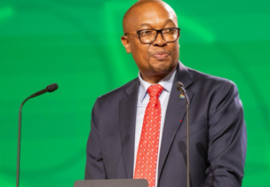
Trade, Industry and Competition Minister Parks Tau says the South African government has a central role in the successful implementation of country's industrial policy.
However, the implementation requires close collaboration between government, business, labour, and civil society for it to succeed.
He was speaking at a Ministerial Post–Budget Vote Media and Stakeholder Roundtable that he hosted in Cape Town last night.
The discussions focused on inclusive economic growth and key priorities identified in the 2026/2027 National Assembly Budget Vote Speech that he delivered yesterday.
“We certainly believe that if implemented in the right way, supported by the correct policies, fiscal, trade and industrial instruments, we should be able to undertake a significant shift in our industrialisation process.
“The implementation mechanisms of the industrial strategy include issues around energy pricing in the country, industrial financing, and defining the respective roles of the public and private sectors, as well as how we incentivise partnerships around these initiatives,” Tau said.
“We have spoken about scaling up export credit support and partnering with financial institutions to underwrite exports from the country.
“We have identified the need for partnerships, because not all the required resources will come from government. Consequently, we need to mobilise private-sector participation, financial institutions, and international partners,” he said.
Tau also emphasised that he believed South Africa should continue working closely with the United States of America.
“We regard the United States of America as an important trading partner and one of the most influential economies globally. It is therefore important that we maintain and strengthen that relationship. We will continue to engage with our international partners and stakeholders consistently and firmly where necessary,” he added.
“Despite concerns and external pressures, South Africa’s exports have continued to grow, including exports to the United States even amid difficult global conditions. This suggests that, notwithstanding the challenges, South Africa still has significant opportunities to expand and strengthen its position in global markets,” proclaimed Tau.
Group Senior Executive, Strategic Trade at Aspen Pharma Group, Dr Stavros Nicolaou said there was a need for stronger alignment across society, government, business, labour, academia, and civil society around a shared set of national priorities.
“We need all sectors to speak with one voice on the importance of industrialisation and economic development. What is lacking, in many respects, is a sufficiently strong national consensus around our economic direction and priorities.
“Industrial policy must be about ensuring that the country itself benefits more meaningfully from its resources, production capacity and economic activity,” added Dr Nicolaou.
A South African writer, lawyer and entrepreneur, Ms Christine Qunta, observed that transformation was essential for achieving equality, and when it is resisted, equality cannot be achieved. With only 4.4% of the population managing the economy, transformation was crucial.
“For this reason, we must be resolute and unapologetic about transformation,” Qunta said.
Chairperson of the Portfolio Committee on Trade, Industry and Competition, Mr Mzwandile Masina, urged the Department of Trade, Industry and Competition (the dtic), all levels of government and other stakeholders to cease operating in separation, for the benefit of the economy and the public.
He said the dtic has a vital role in coordinating all aspects of the economy to achieve economic transformation. – SAnews.gov.za


