


As South Africa joins the global community in observing International Women’s Day today, government has called on citizens to take an active role in dismantling the attitudes and behaviours that enable violence against women and children.
The call comes as the country marks the day under the theme: ‘Give to Gain’, while also commemorating the historic 1956 Women’s March – a defining moment that took place 70 years ago.
On that day, more than 20 000 women marched to the Union Buildings in Pretoria to protest the oppressive pass laws that restricted the freedom of movement of black South Africans.
Led by courageous activists including Lilian Ngoyi, Helen Joseph, Rahima Moosa and Sophia Williams-De Bruyn, the women marched in peaceful defiance against the apartheid regime.
In a powerful act of protest, they stood in silence for 30 minutes before singing the now iconic struggle song ,“Wathint’ abafazi, Wathint’ imbokodo” (You Strike a Woman, You Strike a Rock).
Their actions sent a powerful message that women would not accept injustice and firmly established the critical role women played in the struggle for freedom, equality and human dignity.
A legacy that demands action
The 1956 march marked a defining moment in South Africa’s history. It challenged both racial oppression and restrictive social norms, demonstrating that women’s contributions extend far beyond the household to every sphere of society.
The bravery and determination of these women laid a strong foundation for the advancement of women’s rights and gender equality for future generations.
Yet decades later, women continue to face a serious and persistent threat.
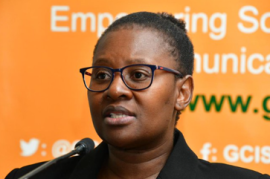
“Today, women face a different but equally serious challenge in the form of gender-based violence and femicide (GBVF),” said Acting Government Spokesperson Nomonde Mnukwa.
According to the 2022 National Gender-Based Violence Study conducted by the Human Sciences Research Council, more than 35% of South African women aged 18 and older have experienced physical or sexual violence in their lifetime, with most cases involving an intimate partner.
The study provides important baseline data to guide interventions aimed at addressing GBVF, as envisaged in the National Strategic Plan on Gender-Based Violence and Femicide.
“Government has recognised GBVF as a national crisis that requires a collective and coordinated response from all sectors of society. Ending this scourge demands the active participation of communities, civil society, government, faith-based organisations, business, labour and citizens,” Mnukwa said.
Everyone has a role to play
This year’s theme, ‘Give to Gain’, calls on all South Africans to actively confront the attitudes and behaviours that allow violence against women and children to persist.
This includes reporting abuse, supporting victims and refusing to remain silent in the face of injustice.
Government emphasised that ensuring the safety and dignity of women and children is a shared responsibility.
“As we commemorate International Women’s Day and honour the legacy of the women of 1956, government calls on all South Africans to work together to build a society that is free from GBVF, and where the rights, safety and empowerment of women are fully realised,” Mnukwa said. – SAnews.gov.za


