


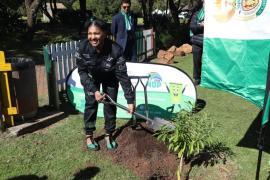
The Department of Forestry, Fisheries and the Environment (DFFE), in partnership with the Department of Agriculture and the International Union for Conservation of Nature (IUCN), is implementing land restoration projects in Limpopo and the Northern Cape to combat land degradation while improving livelihoods in rural communities.
The projects are already delivering tangible benefits, including improved access to water, job creation and skills development, while promoting sustainable land management and environmental stewardship.
As part of the initiative, two boreholes were officially handed over to the communities of Rietfontein and Philandersbron, improving water availability in these drought-stricken areas.
In addition, 84 beneficiaries - comprising women, young people and persons with disabilities - received training and employment through an invasive plant species removal programme covering 700 hectares.
The project focuses particularly on eradicating the highly problematic alien Prosopis species.
An accompanying small grant project, running from April 2026 to April 2027, is also being implemented to support sustainable land management and food security, creating 10 temporary jobs.
Speaking on Wednesday in commemoration of Desertification and Drought Day (DDD) 2026, Deputy Minister of Forestry, Fisheries and the Environment, Bernice Swarts, underscored the importance of protecting and restoring land resources through sustainable land management.
"Together we need to work towards ensuring sustainable land management and environmental stewardship to ensure healthier ecosystems and strengthened socio-economic conditions of rural communities,” Swarts said.
Observed globally on 17 June each year, Desertification and Drought Day raises awareness of the need to restore degraded ecosystems and promote sustainable land-use practices.
The 2026 theme, "Rangelands: Recognise. Respect. Restore," highlights the critical role of rangelands as biodiversity hotspots and providers of food security, clean drinking water, jobs and socio-economic opportunities.
Healthy rangelands contribute significantly to food security, climate change adaptation and water resource management, while also creating opportunities for employment and the development of green businesses.
Rangelands cover vast areas of the world's surface and provide essential ecosystem services, including livestock grazing, carbon sequestration, water regulation and biodiversity conservation. However, they remain among the most vulnerable and degraded ecosystems globally.
According to the department, continued degradation of these landscapes threatens agricultural production, undermines climate change adaptation efforts and places increasing pressure on the livelihoods of communities that depend on them.
This year's commemoration aims to raise awareness of the multiple benefits of sustainable land management and ecosystem restoration. -SAnews.gov.za


