


In the 2025/26 financial year, the Department of Forestry, Fisheries and the Environment transferred the management of eight plantations to local communities to foster land ownership and create economic opportunities in the forestry sector.
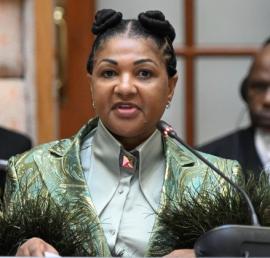
According to Deputy Minister of Forestry, Fisheries and the Environment Bernice Swarts, who delivered her department’s Budget Vote in Parliament, the transformation of the forestry sector remains one of the department’s key strategic priorities.
“We are confident that these community-owned plantations will create jobs, stimulate small businesses and strengthen rural livelihoods, especially for women and youth, as we remain resolute to ensure an inclusive program and broaden participation,” Swarts said on Tuesday.
By transferring the management of these plantations, the department aims to foster a sense of ownership among community members while providing opportunities to participate meaningfully in the forestry value chain.
The eight Community Forestry Agreements were concluded in the Eastern Cape and cover Hamburg, Manina Block H&J, Manina Block K, Mthintloni, Ngcobo, Nkobongo, Xhorana and Zikhova.
“In the 2026/27 financial year, a further 8 plantations will be transferred to communities. The department is also mobilising private sector partners to provide financial support for this important programme.”
“Through our outreach programmes, we will continue to raise awareness of these opportunities among women and promote forestry careers in our schools,” she added.
Protecting the environment
The Deputy Minister called on South Africans to work with the government to protect and conserve the environment for the benefit of current and future generations.
Swarts said the department is addressing pollution caused by the mismanagement of waste by strengthening the Local Government Support Programme in partnership with the South African Local Government Association (SALGA).
“We continue to implement municipal greening campaigns as one of the interventions aimed at reducing pollution, removing waste from public spaces, promoting environmental awareness and supporting separation, and recycling initiatives,” the Deputy Minister said.
The department noted improvements in the collection of electrical and electronic waste, commonly referred to as e-waste, through Extended Producer Responsibility (EPR) fees.
“The increasing use of electrical and electronic equipment has resulted in large volumes of discarded devices, many of which contain hazardous substances that pose serious risks to human health and the environment if not managed well.”
“There is growing accountability among producers of prioritised products, with Producer Responsibility Organisations (PROs) playing a central role in implementing EPR systems across South Africa.”
“These organisations are responsible for developing and managing systems to collect, recycle and responsibly manage waste generated by products placed on the market,” she explained.
Over the past two financial years, the department launched and implemented the e-waste programme in partnership with PROs, which purchased e-waste items from communities.
Through this initiative, the Producer Responsibility Organisations collected more than 86 000 kilograms (86 tons) of e-waste, with more than R267 700 paid to communities as incentives. -SAnews.gov.za


