


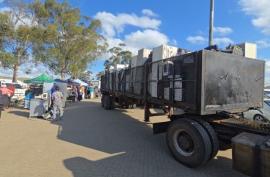
Deputy Minister of Forestry, Fisheries and the Environment, Bernice Swarts, has launched an e-waste collection and recycling pilot project in Mthatha, in the Eastern Cape.
Speaking at the launch on Wednesday, Swarts described the initiative as a “practical and timely intervention” aimed at strengthening waste management, protecting the environment, and creating local economic opportunities.
Electronic waste, commonly known as e-waste, is considered the fastest-growing waste stream globally due to the increasing use of electrical and electronic equipment.
Swarts warned that discarded devices often contain hazardous substances that can pose serious risks to human health and the environment if not properly managed.
According to the Deputy Minister, South Africa generates more than 360 000 tonnes of e-waste annually, while only a small proportion is formally recycled.
She said government’s prohibition on disposing e-waste at landfill sites, together with the implementation of Extended Producer Responsibility regulations, demonstrates a commitment to increasing reuse, recycling, and recovery of electronic waste.
Swarts said municipalities such as King Sabata Dalindyebo face ongoing waste management challenges due to limited infrastructure, insufficient waste minimisation initiatives, and low public awareness around e-waste recycling.
She said the pilot project seeks to address these issues by creating accessible collection systems and encouraging stronger community participation.
The Deputy Minister outlined the department’s broader e-waste collection programme, which began during the 2024/25 financial year as part of Extended Producer Responsibility implementation.
The programme was first introduced in Mpumalanga in the Bushbuckridge and Nkomazi local municipalities before expanding to Rustenburg and Madibeng in the North West Province, followed by the Cities of Johannesburg and Ekurhuleni in Gauteng.
Swarts also referred to recent community engagements in the Northern Cape’s Ga-Segonyana Local Municipality, noting that e-waste initiatives in rural and peri-urban areas had resulted in more than 86 000kg of e-waste being collected nationwide.
Communities participating in the programme received more than R267 700 in incentives.
She said the outcomes demonstrated the environmental and public health benefits of partnerships between government and Producer Responsibility Organisations.
The Eastern Cape project is being implemented through a partnership involving the Department of Forestry, Fisheries and the Environment, the Eastern Cape Department of Environment, King Sabata Dalindyebo Local Municipality, and Producer Responsibility Organisations.
Swarts said the collaboration would improve coordination between different spheres of government while ensuring implementation aligns with national policy and regulatory frameworks.
Community involvement, she added, would be central to the project’s success through the establishment of drop-off and collection points, collaboration with local small businesses, and targeted awareness campaigns to promote responsible recycling practices at household level.
Beyond environmental protection, Swarts said the initiative could contribute to job creation, skills development, and increased participation of small enterprises in the recycling economy.
She added that the project supports the objectives of the National Waste Management Strategy by reducing waste sent to landfill sites, increasing recycling rates, and promoting inclusive economic growth.
The initiative is also expected to serve as a model for similar programmes in other municipalities across the Eastern Cape.
The department will monitor the project’s progress using indicators such as volumes of e-waste collected, levels of community participation, SMME involvement, and employment opportunities created.
Swarts called on residents, industry partners, and community structures across King Sabata Dalindyebo Local Municipality and the wider OR Tambo District to support the initiative.
“Through collective effort, we can reduce environmental risks, recover valuable resources, and create sustainable livelihoods,” she said. - SAnews.gov.za


