


The implementation of structural reforms has liberalised the energy market; shifted it away from reliance on Eskom; resolved Eskom's debt and enabled the power utility to invest in repairing and maintaining its energy generation infrastructure.
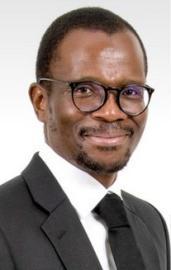
“The structural reforms are paying off. We have liberalised the energy market, and we no longer depend solely on Eskom for our electricity supply,” Deputy Finance Minister, Dr David Masondo, said on Tuesday.
Through Operation Vulindlela, government is advancing structural reforms to unlock growth, strengthen infrastructure, and improve state capabilities.
“These structural reforms, along with the resolution of Eskom’s R420 billion debt, have enabled Eskom to invest in repairing and maintaining its energy generation infrastructure. As a result, we are currently not experiencing load shedding.
“It is therefore essential that we continue to reform our economy to withstand global headwinds and external shocks. We must also implement additional measures, such as increasing investment in renewable energy and gas, to diversify our energy sources and reduce the risk of future energy disruptions,” the Deputy Minister said.
Masondo was addressing the launch of Phase 3 of the Towards Inclusive Economic Development (SA-TIED) programme, an initiative intended to support policymaking in South Africa by working closely with researchers to close knowledge gaps crucial to the achievement of inclusive growth and economic transformation.
“We are launching Phase III at a critical moment. Globally, economic conditions remain uncertain. In this environment, evidence becomes even more important. It enables better prioritisation. It supports more efficient allocation of resources. And it ensures that reforms deliver measurable outcomes,” Masondo said.
Phase III, running from 2026 to 2029, will consolidate and expand the gains already achieved.
The programme will continue to focus on key areas, including public revenue mobilisation, poverty, inequality, and labour markets; Macro-fiscal analysis; and climate-related challenges across food, energy, and water
“Importantly, Phase III introduces a new focus on public expenditure. This is critical. As fiscal space becomes more constrained, the question is no longer only how much we spend, but how effectively we spend.
“Improving the efficiency and impact of public expenditure will be central to achieving inclusive growth,” the Deputy Minister said.
Phase III will be anchored on three core priorities.
First, deepening research for evidence-based policymaking, including strengthening the link between research and implementation.
Second, strengthening data infrastructure by expanding access to administrative datasets and ensuring long-term sustainability.
Third, building state capability through training, skills development, and greater integration of research within government.
“Ultimately, sustainable reform depends not only on good ideas, but on the capacity to implement them. The defining feature of our time is uncertainty. In such an environment, governments must be agile, responsive, and informed.
“SA-TIED represents exactly the kind of institutional innovation required to meet this challenge. As we launch Phase III, we reaffirm a simple principle: better evidence leads to better policy. And better policy leads to better outcomes for our people,” the Deputy Minister said.
He added that the National Treasury remains committed to sustaining the partnership with all partners in government, academia, and development partners, and ensuring that evidence continues to inform the delivery of reform in South Africa.
“This programme is not only about producing research, but also about embedding evidence within the processes of government.
“It is built on long-term collaboration between policymakers and researchers, grounded in trust and shared purpose. Our partnership with UNU-WIDER has been central to this success,” the Deputy Minister said.
The World Institute for Development Economics Research of the United Nations University (UNU-WIDER) brings global expertise, strong research networks, and methodological rigour, which have strengthened the quality and relevance of the work produced.
“We also extend our appreciation to the European Union and the United Kingdom for their continued support. These partnerships demonstrate that well-aligned collaboration can build lasting institutional capability,” Masondo said. -SAnews.gov.za


