


Sunday, March 29, 2026
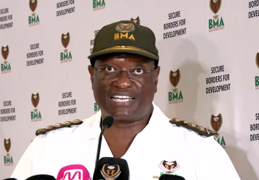
The Border Management Authority (BMA) is ready to ensure the efficient, secure and seamless movement of people and goods across South Africa’s 71 ports of entry during the Easter period.
“This plan reflects the Authority’s commitment for the robust implementation of border law enforcement functions while enabling legitimate travel, tourism and trade during one of the busiest periods on the country’s national calendar,” the Authority’s Commissioner, Dr Michael Masiapato, said on Sunday.
The agency’s Easter Operational Plan is supported by various structures across the national security cluster that include the Inter-ministerial Consultative Committee on Border Management, the Border Technical Committee of Directors-General and Heads of Entities, the National Joint Operational and Intelligence Structure (NATJOINTS), Provincial Joint Operations (Provjoints) and other structures.
Masiapato told a media briefing in Pretoria that Planning, Execution, Demobilisation and Sustenance are the four key phases of the Easter Operational Plan. The planning phase of the plan began at the tail-end of the festive period and will end on Monday, 30 March.
As part of the planning phase, the BMA has held extensive port-based inter-jurisdictional discussions with South Africa’s six neighbouring countries, namely Lesotho, Mozambique, Zimbabwe, Namibia, eSwatini and Botswana.
“These discussions were focused on maintaining streamlined border processes and enhancing coordination of operational modalities. As a result, agreements were reached to adjust operating hours at some of the key ports of entry, which do not operate on a 24-hour basis,” said the Commissioner.
Ports of entry and partnerships
The Groblersbridge port of entry in Botswana will operate on a 24-hour basis on Thursday, 02 April. On Good Friday (03 April) and Saturday, 04 April, the border, which is usually open from 6 am to 10 pm, will extend its hours from 10 pm to midnight. From 05-06 April, the border will be open on a 24-hour basis.
The Kopfontein border will open for 24 hours on 02 and 05 April.
The Kosibay port of entry (Mozambique) will extend its hours from the normal 8 am to 5pm to 6 am to 6pm on 27 March and 10 April.
Eswatini’s Jeppes Reef, whose current hours are 7 am to 8 pm, will open until 10 pm on 02 and 03 April and again on 05 to 06 April. The Mananga port of entry will also extend its hours to 10 pm on 01 and 02 April and 05 to 06 April.
Lesotho’s Sanipass will remain open until 7pm on 01 to 02 April, while the Caledonspoort border will open for 24 hours on 02 April and until midnight on 05 and 06 April. The Van Rooyensgate port of entry will open for 24 hours on 02 April and until midnight on 05 and 06 April.
Monontsa Pass will close at 6pm on 02 and 03 April and again on 05 and 06 April. Qasha’s Nek will close at 10pm on 30-31 March and on 02 April.
Given the existing BMA resource constraints, this phase has focused on integrated stakeholder engagements for the purposes of identifying partnerships that would assist in augmenting our resources. As part of these efforts, the Western Cape Government has allocated approximately 50 officials to support the BMA as Immigration Officers at Cape Town International Airport.
The Gauteng Provincial Government has also maintained its support through the deployment of 80 officers assisting as Immigration Officers at OR Tambo International Airport.
The BMA has also partnered with the Department of Social Development to deploy various social workers to the various ports of entry through their provincial structures as part of efforts to tackle the cross-border social protection challenges, particularly the safeguarding of minors and vulnerable travellers. This includes those without requisite travel documentation and victims of trafficking.
The Department of Tourism has also deployed over 160 tourism safety officers to enhance the seamless flow of traveller movements within the port premises.
“With regards to the infrastructure augmentation, the Department of Public Works and Infrastructure, through its continued support, will provide temporary lighting, ablution facilities, barricades and Jojo water tankers, amongst others, to enhance conditions within the ports of entry and transit corridors.
“For corridor management, the national, provincial and local traffic authorities will be intensifying their deployments to ensure strict and full compliance with the traffic protocols,” said Masiapato.
The BMA welcomed the partnerships, which also extend to DCD Protected Mobility and the Paramount Group, among others, as these align with the quest for technology-driven border management. This is as they support the deployment of an integrated suite of advanced surveillance, mobility and protective technologies for this Easter period.
Execution
Execution of the authority’s plan will start on Tuesday, 31 March and end on Thursday, 09 April.
“The Execution Phase is divided into two segments, and these are the departure leg running from the 31 March to the 04 April 2026 and the arrival leg which will run from the 05 to 9 April 2026.
“Based on historical trends, the peak travel volumes for the departure leg is expected on Thursday, the 02 April 2026, whilst the peak travel volumes for the arrival leg is expected on Easter Monday, the 06 of April 2026.
We have intentionally emphasised these dates to encourage travellers and stakeholders to take note and appropriately plan their journeys in advance, including considering early travel options where possible. During these peak periods, we expect significant traveller and traffic volumes potentially reaching double the baseline and exceeding 25,000 travellers per day at the busiest ports of entry,” explained the Commissioner.
When compared to the December and January festive period, which is characterised by spread travel patterns, historical data confirms that the management of Easter travel remains complex, given its compact nature with little room for flexibility as it converges around one weekend.
“Notwithstanding these facts, the BMA remains resolute to ensure heightened deployments and intensified border operations at the 71 ports of entry, key transit corridors leading to the ports of entry and the vulnerable segments along the borderline,” he said. -SAnews.gov.za
Share this post:


