


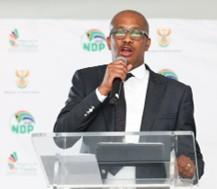
South Africans are urged to use the lessons of history to strengthen democracy, defend freedom and build a more inclusive future.
This was the rallying call made by Deputy Minister in the Presidency Kenny Morolong during the North West launch of the Milestones of Freedom campaign.
Morolong noted that the yearlong programme provides an opportunity for citizens to reflect on the country’s democratic journey while acknowledging the work that remains to address poverty, inequality and unemployment.
“This campaign is being commemorated...under the theme ‘Honouring the Past. Delivering the Future’. This theme perfectly captures the journey we have travelled as a nation: from the struggle against injustice to the struggle to continuously solidify are democratic gains.
“Throughout this year, we have visited provinces and communities to mobilise citizens to celebrate the gains, achievements and milestones of our 32 years of democracy.
“We have done this mindful of the challenges that still beset many of our communities. Mindful that the legacy of our past continues to live with us. Mindful of the work that still needs to be done to break away from all our socioeconomic challenges mainly based on a tripod of poverty, inequality and unemployment,” Morolong said.
The provincial launch is part of the broader rollout of the Milestones of Freedom Campaign which was launched by President Cyril Ramaphosa in June this year.
The campaign brings together four significant milestones in the South Africa’s path to democracy.
These are:
- The 30th anniversary of the adoption of the Constitution
- The 50th anniversary of the 1976 youth uprising
- The 70th anniversary of the 1956 Women’s March
- The 60th anniversary of the forced removals from District Six
“The Milestones of Freedom Campaign serves to remind us our past is vitally important because every historic occurrence we commemorate, shaped the democratic future we now inherit.
“When we remember the Constitution, the 1976 youth uprising, the 1956 Women’s March and the trauma of forced removals, we are not merely looking backwards. We are gathering the moral strength to defend freedom, deepen democracy and deliver dignity to every South African,” the Deputy Minister said.
The forced removals
Morolong noted that communities across the country, including Makweteng in North West, suffered under apartheid-era legislation like the Group Areas Act.
“To remember Makweteng is therefore to remember that forced removals were not only a District Six story; they were a national wound felt deeply here in the North West, and they remain part of the memory we must use to defend justice, dignity and redress,” he said.
The Deputy Minister highlighted that the democratic government has sought to address the devastating consequences of forced removals through land restitution.
He noted that between 1998 and 2024, government settled 83 205 land claims nationally with 3981 claims settled in the North West.
“As government we remain determined to heal the wounds of the past and to build a bridge to a better tomorrow for all.
“The restoration of land and the handover of title deeds contributes to healing, dignity, socio-economic justice for our nation. Just and equitable land restitution remains a crucial instrument to redress historical dispossession, restore dignity and foster social cohesion,” he said.
Furthermore, government has invested some R58 billion in land purchases, grants and financial compensation supporting 376 976 beneficiaries across the country.
Turning to gains made since the advent of democracy, Morolong cited government’s work in expanding access to sanitation, electricity, water, housing and social protection.
He noted that access to improved sanitation nationally has increased from 61.7% in 2002 to 84% in 2025, while in North West it rose from 54.1% to 78.8% over the same period.
Additionally, household access to electricity increased from 76.7% nationally in 2002 to 90.6% in 2025, while North West recorded growth from 82% to 90.9%.
“These gains matter because they show that the living circumstances of our people have changed.
“This did not happen by chance or through divine intervention. It happened because democracy created the constitutional, institutional and policy instruments to undo the evils of the past and restore hope and dignity to all,” he emphasised.
The women of 1956
The Deputy Minister paid tribute to the women who led the 1956 anti-pass protests, including North West-born struggle stalwarts Dr Ruth Segomotsi Mompati, Rita Ndzanga and Josie Mpama.
“In recognising these heroines, we are also called upon to strengthen our national memory of the milestones that led to South Africa’s freedom.
“A nation that remembers honestly is better able to teach future generations that democracy was not handed to us, but was won through organised resistance, sacrifice and the courage of ordinary people who chose justice over fear,” he said.
On gender-based violence and femicide (GBVF), Morolong called on men to play a leading role in combating violence against women and children.
“As men, we need to be at the forefront of the fight against GBVF. We have to clearly say not in our name, these criminals do not represent us and are an afront to the struggles that brought this country together.
“We need to state without any equivocation that women...have a right to walk our streets at anytime without any fear of attack,” he said.
1976 Youth uprising
Morolong also honoured the legacy of the youth of 1976, describing them as active participants in the struggle for freedom whose sacrifices continue to inspire efforts to transform education and expand opportunities for young people.
“Their memory must continue to challenge us to invest in young people not as beneficiaries of democracy alone, but as builders of South Africa’s next chapter. Our freedom is not free; it was forged in pain, loss and untold sacrifice,” he said.
“The Milestones of Freedom Campaign therefore calls on us to honour the past, defend the truth of our history, draw strength from the courage of those who came before us, and deliver a better future for everyone,” he said.
Struggle heroes
Before the official ceremony, delegates lead by the Deputy Minister, visited a memorial site where wreaths were laid in remembrance of fallen struggle heroes and heroines.
The ceremony commemorated struggle heroes like Mfana Majova who went to exile at an early age and was later killed by the apartheid security after he had returned home.
Mjova’s family member, Andile Majova told SAnews that the family feels relieved at government recognition at the efforts of heroes who fought for the country’s liberation.
“Today we are enjoying freedom because of his bravery,” he said. – SAnews.gov.za


