


The Minister of Forestry, Fisheries and the Environment, David Maynier, has welcomed the arrest of two men for alleged wildlife trafficking in separate cases at OR Tambo International Airport.
According to the Minister, the arrests followed a joint intelligence-driven operation led by the Department of Forestry, Fisheries and the Environment (DFFE) Environmental Management Inspectorate, also known as the Green Scorpions, with the South African Police Service (SAPS) Crime Intelligence and SAPS Border Police, supported by members of the SAPS Stock Theft and Endangered Species Unit.
The first operation resulted in the arrest of a 50-year-old Thai national at OR Tambo International Airport on 20 August 2026 for the alleged illegal export of 50 bird eggs concealed in a homemade incubator bag carried as hand luggage.
Preliminary investigations indicate that the eggs came from parrot species listed under the Convention on International Trade in Endangered Species of Wild Fauna and Flora (CITES).
The arrest follows a similar incident on 16 July 2026, when a 23-year-old Thai national was intercepted at OR Tambo International Airport while allegedly attempting to smuggle 418 parrot eggs concealed in two homemade incubator bags.
Investigations into both cases are ongoing.
The department said the arrests highlight the growing sophistication of transnational wildlife trafficking networks and reinforce the importance of coordinated, intelligence-led law enforcement.
“The success of this operation demonstrates the need for a joint approach to enforcing environmental law. The complex criminal networks that support illegal wildlife trafficking can only be challenged by a coordinated defence of our natural heritage,” Maynier said in a statement on Wednesday.
The department said the illegal collection and trafficking of parrot eggs pose a serious threat to wild bird populations and animal welfare.
The eggs are often concealed in improvised incubation devices and transported under conditions that significantly compromise their viability and endanger the welfare of developing embryos and hatchlings.
In response to the growing threat of wildlife trafficking, South Africa developed the National Integrated Strategy to Combat Wildlife Trafficking (NISCWT) to strengthen collaboration among government institutions, law enforcement agencies, conservation authorities, customs officials, prosecutors and international partners in dismantling criminal networks involved in the illicit wildlife trade.
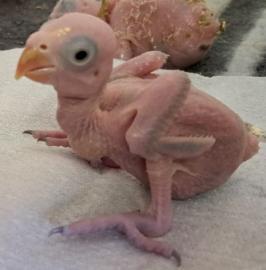
“Several of the rescued eggs have successfully hatched, and the chicks are receiving intensive veterinary and husbandry care to maximise their chances of survival, so the support of the South African National Biodiversity Institute (SANBI) personnel in safeguarding the welfare of these vulnerable animals has been invaluable.
“The successful interception of these smuggling attempts demonstrates the effectiveness of the collaborative approach promoted through the NISCWT and reflects South Africa's unwavering commitment to combating wildlife trafficking and protecting the country's rich biodiversity heritage,” the department said.
The export of specimens listed under CITES is strictly regulated and requires permits issued by both exporting and importing countries.
Section 102 of the National Environmental Management: Biodiversity Act, 2004 (Act No. 10 of 2004), provides that a person convicted of an offence in terms of section 101 may be liable to a fine not exceeding R10 million, imprisonment for a period not exceeding 10 years, or both.
“The DFFE remains committed to working closely with national and international law enforcement partners to identify, investigate, and prosecute individuals and criminal syndicates involved in the illegal wildlife trade.
“Through continued collaboration, intelligence sharing, and targeted enforcement actions, South Africa will continue to strengthen its efforts to combat wildlife crime and safeguard its natural resources for future generations,” the department said. -SAnews.gov.za


