


The Presidential Youth Employment Intervention (PYEI) continues to make significant strides in connecting young South Africans to earning opportunities, with 155 161 new opportunities secured during the fourth quarter of the 2025/26 financial year.
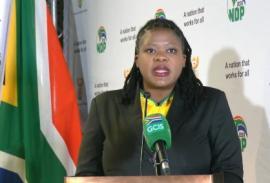
Speaking during a media briefing in Pretoria on Friday, Deputy Minister in The Presidency Nonceba Mhlauli said the intervention remains a key vehicle in government's efforts to address youth unemployment.
"The PYEI is South Africa's most comprehensive flagship strategy designed to address the chronic youth unemployment crisis. Launched in 2020 by President Cyril Ramaphosa, the PYEI acts as a multi-sector action plan aimed at transitioning young people from 'learning to earning'.
“Rather than replacing existing systems, it coordinates, accelerates, and enhances national efforts across government departments, the private sector, and civil society," Mhlauli said.
The Deputy Minister noted that the release of the fourth-quarter report coincides with the 50th anniversary of the 1976 youth uprising.
"Today’s progress report comes at a seminal moment as we commemorate the strides made by the youth of 1976 exactly 50 years ago. Let their steadfast courage and sacrifice be a reminder to all young people of South Africa that change only comes about though action,” she said.
She encouraged young people to participate in the upcoming voter registration weekend.
"We therefore want to encourage all young people to make use of this upcoming open voter registration weekend of the IEC to register to vote. By registering to vote, young people affirm their voice, strengthen our democracy and contribute to building a South Africa that reflects their aspirations, hopes and dreams,” Mhlauli said.
According to the report, the National Pathway Management Network (NPMN), which serves as the backbone of the intervention, continues to expand its reach.
More than 5.9 million young people are currently registered on the SA Youth platform, while over 5.36 million are registered on the Employment Services of South Africa (ESSA) system.
Mhlauli said since its launch in 2020, the PYEI has facilitated access to more than 2.5 million temporary earning opportunities through SA Youth and a further 422 667 opportunities through ESSA.
She added that the intervention continues to advance gender inclusion, with over 70% of opportunities accessed through SA Youth being taken up by young women.
Among the key achievements recorded during the quarter was the placement of 18 310 young people into workplace experience opportunities through the private-sector-led Youth Employment Service (YES).
In addition, the Department of Higher Education and Training's Sector Education and Training Authority (SETA) placements programme facilitated 5 005 work-integrated learning opportunities for Technical and Vocational Education and Training (TVET) learners and graduates.
The National Youth Development Agency (NYDA) provided 6 085 financial and non-financial enterprise opportunities to young entrepreneurs, while Phase 4 of the revitalised National Youth Service (NYS) recruited an additional 5 272 young people.
This brought the total number of paid service opportunities created through the programme to 138 056 since its inception.
Looking ahead, Mhlauli said Phase 5 of the NYS will recruit a further 100 000 young people across the country.
A major highlight during the quarter was the conclusion of the Jobs Boost Outcomes Fund Pilot, a R300 million outcomes-based financing initiative aimed at supporting youth employment.
As of 30 March 2026, the pilot had enrolled 9 174 young people, achieving 110% of its enrolment target. It also secured 7 044 job placements, exceeding the original target by 54%.
Furthermore, 5 211 three-month sustained jobs had been verified, while 3 795 jobs had been sustained for six months as verification processes continued.
"Most importantly, it proved that outcomes-based financing successfully supports the most disadvantaged, with youth from Quintile 1 schools achieving higher retention rates. Based on these lessons, we are preparing to scale this fund to R1 billion to deliver 20,000 high-quality job placements through a public-private partnership approach," Mhlauli said.
The Deputy Minister highlighted progress made through the NPMN Innovation Fund, which is focused on expanding opportunities in rural communities.
She said HPSA Southern Africa has enrolled 1 800 young people in KwaZulu-Natal to provide agricultural and animal health services. Of these, 678 are already generating income, collectively recording R1.4 million in sales.
"Already, 678 of these young people are actively generating income, recording R1.4 million in collective sales and proving how targeted innovation can build sustainable self-employment where formal jobs are scarce," she said.
Looking ahead to the 2026/27 financial year, Mhlauli said government remains focused on expanding quality work opportunities and strengthening partnerships to support young people. – SAnews.gov.za


