


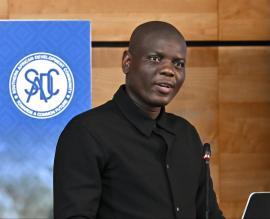
International Relations and Cooperation Minister Ronald Lamola says the future of the Southern African Development Community (SADC) will be determined by the region’s ability to act collectively in response to growing geopolitical and economic pressures.
Delivering closing remarks at the SADC Ministers of Foreign Affairs Retreat in Skukuza in the Kruger National Park on Saturday, Lamola said the gathering had reinforced the importance of African unity, shared responsibility and coordinated regional action.
Held from 22 to 24 May, the retreat brought together foreign ministers and senior officials from across the region to assess the impact of global geopolitical developments on Southern Africa’s economies, food systems, trade routes and energy security.
Drawing on African traditions of leadership and consultation, Lamola compared the retreat to historic gatherings where elders advised chiefs and kings on matters affecting communities.
“It is no coincidence that this retreat closes on the eve of Africa Day. Our retreat has surely lived up to this rich African tradition of collective wisdom, frank reflection, and shared responsibility in confronting the challenges facing our region and shaping a common future for our people,” he said.
Lamola said ministers recognised that the region continues to face the effects of global conflicts, weakening multilateralism and increasing geopolitical fragmentation.
“Our retreat further acknowledged that our region continues to feel the harsh aftershocks of conflicts that disregard international law, weaken multilateralism, and inflict devastating humanitarian and economic consequences across the globe,” he said.
At the same time, he stressed that Southern Africa possesses significant natural and economic resources that could help cushion member states against external shocks if countries work together.
“The retreat noted that our region has abundant natural resources… if we work together as a region collectively enhancing all our efforts, skills, and all the natural resources available in our region, we can be able to respond and be able to be cushioned against some of these aftershocks,” Lamola said.
He noted that these pressures have emerged while many economies were still recovering from the effects of the COVID-19 pandemic and confronting rising protectionism and geopolitical rivalry.
“These pressures have also emerged while our economies were still recovering from the scars of COVID-19 and confronting rising protectionism, unilateral tariffs, and intensifying geopolitical rivalry,” he said.
Lamola said ministers reaffirmed their commitment to strengthening regional resilience, integration and sustainable development through coordinated policies and stronger institutions.
“We reaffirmed our commitment to collective action aimed at strengthening resilience, deepening regional integration, and advancing sustainable development across the member states,” he said.
The retreat focused on five major thematic areas, including financing regional integration, industrialisation, infrastructure and logistics, energy and mineral resources, as well as agriculture and food security.
Lamola said discussions produced concrete proposals aimed at strengthening regional value chains, expanding energy security and accelerating industrialisation.
“Concrete proposals emerged on how SADC can strengthen regional value chains in oil and gas, accelerate mineral beneficiation, fast-track land and maritime corridors, deepen agro-processing, expand energy security initiatives, share industrial expertise, and establish cross-border special economic zones capable of driving industrialisation and regional integration,” he said.
He added that ministers also discussed the need to strengthen regional financial institutions and improve domestic resource mobilisation to finance strategic infrastructure and development priorities.
“This retreat has reminded us that while global tensions may shape the environment around us, the future of our region will ultimately be determined by the boldness of our collective action, the strength of our regional solidarity, and our willingness to act together in pursuit of our shared destiny,” Lamola said.
The Minister concluded by emphasising the interconnected nature of SADC economies, saying growth in one member state would ultimately benefit the entire region.
“We are interlinked. We have a shared destiny. We also have to have a shared journey together to achieve prosperity,” he said. – SAnews.gov.za


