


Southern African Development Community (SADC) Foreign Ministers have been urged to move beyond observation and take coordinated action as global geopolitical shifts, rising costs of living and external shocks continue to strain the region’s economies.
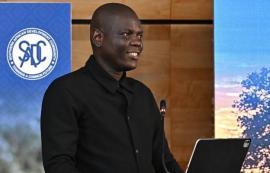
Delivering opening remarks at the SADC Ministers of Foreign Affairs Retreat at Skukuza in the Kruger National Park, International Relations and Cooperation (DIRCO) Minister Ronald Lamola said the moment required “urgent, coordinated and forward-looking” regional responses to an increasingly fragmented global order.
The retreat is being held in the heart of the iconic wildlife reserve, where early morning mist over the Sabie River and the distant calls of birds and wildlife provided a striking contrast to the high-stakes diplomatic discussions unfolding inside the Skukuza venue.
The setting, Lamola said, was symbolic of a region shaped by shared geography, history and interconnected futures.
Lamola used his opening address to frame the global environment as one in transition, warning that Southern Africa was being affected by forces far beyond its borders.
He said the international system was undergoing a deep transformation, marked by shifting power dynamics and increasing instability.
“The international system is undergoing profound transformation as it transitions towards a more multipolar order, marked by intensified geopolitical competition, economic fragmentation, technological rivalry and growing uncertainty surrounding global peace, security and development cooperation,” he said.
He added that the shift was already disrupting global supply chains and intensifying pressure on economies in the region.
“Unlike previous eras dominated by a single or bipolar power structure, today’s geopolitical landscape is characterised by multiple centres of power competing across economic, political, technological and strategic domains.
“These tensions are increasingly disrupting global supply chains, reshaping investment flows, intensifying territorial and resource competition and weakening multilateral cooperation,” the Minister said.
Lamola said the retreat was not simply a diplomatic engagement, but a response to a shared regional reality in which member states are simultaneously facing inflation, rising food prices, strained public finances and energy insecurity.
He reflected on discussions held at the March SADC Council of Ministers meeting in Pretoria, where ministers first agreed on the need for a dedicated retreat to assess global developments.
At the time, he said, member states had already acknowledged the growing impact of global shocks on the region’s development agenda.
“Together, we arrived at the conclusion that the resilience of our region, and indeed of our continent, was once again being tested by developments far beyond our borders,” he said.
He said those earlier deliberations made clear that SADC must urgently adopt coordinated strategies to protect regional integration, industrialisation, infrastructure development and food security from external pressures.
Lamola said the retreat was convened on the basis that Southern Africa could not remain passive in the face of global shifts.
“It was born out of the belief that we cannot afford to be passive observers while the decisions of the powerful reshape the global order in ways that risk reversing the gains we have recorded over decades,” he said.
A central focus of the retreat will be infrastructure, industrialisation, trade, energy, food systems and migration, issues Lamola described as “interconnected and central to the region’s future”.
He said migration in particular would be a key area of discussion, especially as South Africa continues to face protests and public frustration linked to illegal immigration.
“One of the thematic areas of engagement is on the movement of goods and people. This discussion will also be taking place during a period where a wave of protests against illegal immigration is happening in South Africa, particularly against immigrants of African descent,” he said.
Lamola stressed that South Africa remains committed to regional mobility frameworks while insisting that law enforcement must remain the only authority responsible for dealing with immigration violations.
“The South African government has condemned in the strongest terms any attacks against foreign nationals, and that no one has the power to take laws into their own hands; it is the responsibility of law enforcement to enforce the law, not private citizens,” he said.
He drew a distinction between migration as a regional development driver and irregular migration as a governance challenge requiring coordinated action.
“Migration itself is not a problem. The challenge facing South Africa is irregular migration,” Lamola said.
He noted that South Africa is among SADC member states that have ratified regional and continental frameworks on the free movement of people, including the SADC Protocol on the Facilitation of Movement of Persons.
Lamola also called for broader regional reflection on migration pressures, including what he described as “push and pull factors” across countries of origin, transit and destination.
“These discussions must also include the principle of burden sharing, with proper attention given to countries of origin, transit and destination,” he said.
He urged ministers to approach the retreat with honesty, creativity and strategic ambition, warning that the current global moment presents both risks and opportunities for Africa.
Quoting development economist Carlos Lopes, Lamola said the continent must decide whether it will shape or merely respond to global change.
“The current global disorder presents an opportunity for power to be exercised in new ways. But the window will not stay open forever. The rules will be rewritten. The only question is: will Africa be one of the authors?” he said.
The retreat continues over the weekend in Skukuza, with ministers expected to translate the discussions into a coordinated SADC position on geopolitical risks, economic resilience and regional integration. – SAnews.gov.za


