


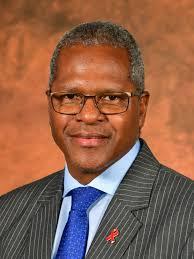
Cooperative Governance and Traditional Affairs (CoGTA) Minister Velenkosini Hlabisa has tabled a combined R423.4 billion budget for Cooperative Governance and Traditional Affairs for the 2026/27 financial year, with government placing renewed focus on fixing dysfunctional municipalities, improving service delivery, and strengthening disaster preparedness.
Presenting the department’s budget in Parliament on Wednesday, Hlabisa said the allocations were aimed at building capable and accountable local government institutions while supporting traditional leadership structures.
Of the total allocation, R422.5 billion has been earmarked for Cooperative Governance, while R900 million will go towards Traditional Affairs.
Hlabisa said the budget should be viewed as a “delivery instrument” intended to improve municipal performance and the quality of life of communities across the country.
The Minister said government had completed its review of the White Paper on Local Government under the theme: “Every Municipality Must Work”, describing it as a key step towards strengthening governance, accountability and service delivery in municipalities.
“The revised White Paper recognises that local government today operates in a far more complex environment than in 1998. It provides a renewed and realistic framework to strengthen governance, accountability and service delivery,” the Minister said.
Several legislative reforms are also being advanced, including amendments aimed at improving municipal governance and addressing instability in coalition-led councils ahead of the 2026 local government elections scheduled for 4 November 2026.
Among the legislative reforms are:
• The Local Government: General Laws Amendment Bill will improve governance and operational efficiency;
• The Municipal Structures Amendment Bill (Coalitions Bill) will address instability in coalition governments. Political parties that will form a coalition government post 4 November 2026 will have to enter into coalition agreements
• The Independent Municipal Demarcation Authority Bill will strengthen transparency and accountability; and
• The Draft Fire Services Bill will modernise fire service governance.
Ethical leadership and audit outcomes
The Minister said government was strengthening competency-based recruitment, professionalising municipal administration and reinforcing ethical leadership.
“The introduction of the Code for Ethical Leadership, together with ethics training programmes, is reinforcing accountability. Without ethical leadership, no reform will succeed,” he said.
Hlabisa also noted improvements in municipal audit outcomes, with 59 municipalities recording improvements and 41 municipalities achieving clean audits.
“Where there is discipline, monitoring and consequence management, improvement follows,” the Minister said.
However, he acknowledged that governance weaknesses and financial mismanagement remained serious concerns in many municipalities.
Interventions in distressed municipalities
Government continues to provide targeted support to municipalities experiencing instability.
In Emfuleni, a Special Purpose Vehicle with Rand Water is being established to stabilise water services.
Meanwhile, national intervention in Ditsobotla has helped stabilise governance, improve financial management and restore basic services following prolonged instability.
“We will not hesitate to intervene where municipalities fail communities,” Hlabisa said.
Infrastructure and service delivery
Hlabisa noted that the District Development Model (DDM) remained central to government’s work but would now move “from planning to delivery.”
Measures being introduced include stronger accountability mechanisms, delivery dashboards and clearer escalation protocols.
The Minister also said government was exploring blended finance models, private sector partnerships, and new funding models to address infrastructure funding constraints.
“We must move beyond reliance on limited municipal balance sheets,” Hlabisa said.
Repositioning of the community work programme
Government plans to reposition the programme towards skills development, enterprise creation and sustainable livelihoods.
The Minister noted that the Community Work Programme currently supports more than 186 000 participants across the country.
Participants are already contributing to waste management, minor infrastructure repairs and local service delivery initiatives.
“This programme must become a pathway to economic opportunity, not only income support,” Hlabisa said.
Disaster recovery support
The Minister said government had allocated R2.161 billion in the previous financial year to 92 municipalities for disaster recovery efforts in provinces including the Eastern Cape, KwaZulu-Natal, Limpopo, Mpumalanga and North West.
An additional R191.16 million was provided through the Disaster Response Grant to municipalities facing immediate pressures.
Further allocations of R151 million for provinces and R203 million for municipalities are also being finalised.
“Furthermore, R166 million was reprioritised from the Municipal Infrastructure Grant to respond to recent floods, especially in Limpopo, Mpumalanga and other provinces,” Hlabisa said.
He stressed that the budget was intended to improve the lives of citizens through better-performing municipalities.
“This budget is not an accounting exercise; it is a delivery instrument. It must translate into functioning municipalities and improved lives.” – SAnews.gov.za


