


The Africa Centres for Disease Control and Prevention (Africa CDC) has welcomed South Africa’s multimillion-dollar contribution to support the Democratic Republic of the Congo (DRC) and Uganda’s response to the Ebola outbreak.
The US$2.5 million pledge was made through the Africa CDC Africa Epidemics Fund.
Earlier this week, the World Health Organisation (WHO) declared an outbreak of the disease a public health emergency of international concern, with hundreds of cases reported.
“Africa CDC expresses its sincere appreciation to the people and Government of South Africa, and to H.E. President Cyril Ramaphosa, African Union Champion on Pandemic Prevention, Preparedness and Response, for this timely demonstration of leadership, solidarity and commitment to Africa’s collective health security.
“At a time when the continent faces increasing public health threats with significant risks of cross-border transmission, South Africa’s contribution sends a strong and reassuring message that Africa stands united in protecting the lives and well-being of its people, a pathway for Africa’s health security and sovereignty,” the continental health body said.
The pledge will support:
- Strengthening critical response operations including continental coordination,
- Surveillance, laboratory systems, rapid response deployment,
- Infection prevention and control, cross-border preparedness, and support for affected communities.
“South Africa’s leadership reflects the growing importance of African-led financing mechanisms and reinforces the vision of a more resilient, self-reliant and health-secure continent.
“It is a practical demonstration of African solidarity in action and a reflection of the continent’s collective responsibility to respond rapidly and decisively to public health emergencies,” the Africa CDC said.
The CDC encouraged AU member states, donor countries, development partners, philanthropic institutions, and the private sector to “follow this example by contributing to the Africa Epidemics Fund and supporting ongoing response efforts”.
“The current outbreak demands urgent, coordinated and adequately financed action to contain transmission, save lives and prevent wider regional escalation.
“Africa CDC remains fully committed to working closely with affected Member States, the African Union Commission, regional economic communities, and global partners to ensure a rapid, effective and Africa-led response,” the Africa CDC said.
The WHO response
Meanwhile, the World Health Organisation (WHO) is ramping up efforts to support the government of the DRC to swiftly implement critical measures to control and halt the outbreak of Ebola in the country.
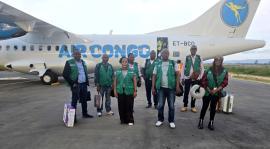
“More than 35 experts and first responders from WHO and the Ministry of Health have been deployed to the field.
“Additional teams are being deployed as the response intensifies to reinforce key measures including disease surveillance for early detection; clinical care; infection prevention and control; and engaging communities to ensure public health measures are observed.
“Collaboration with partner organisations and the private sector has been crucial in the timely delivery of the emergency supplies.
“The United Nations Organization Stabilization Mission in the Democratic Republic of the Congo (MONUSCO) has provided essential airlift support for transporting supplies from Nairobi and facilitated ground access to enhance operational effectiveness,” the WHO said in a statement.
WHO Africa Head of Regional Emergency Operations and Logistics, Adama Thiam added: “The collaboration with MONUSCO has been pivotal in ensuring a swift response. Their ability to provide airlift support significantly enhances our logistics capabilities, allowing us to respond to the needs of the community effectively.”
Additionally, following negotiations, Ethiopian Airlines has reprioritised their flights to “ensure urgent delivery of cargo, demonstrating the commitment of our partners to assist during this critical time”.
“The supplied materials include personal protective equipment, medical kits, tents, and water, sanitation and hygiene items - all crucial for preventing infection and managing cases effectively.
“Additional supplies are already in transit from Kinshasa and will reach Ituri in the coming days to bolster response operations, save lives, protect frontline responders and help end the outbreak,” the WHO said. – SAnews.gov.za


