


The Office of the Chief Justice (OCJ) has been allocated a budget of almost R3.4 billion for the 2026/27 financial year to operationalise administration, Superior Court Services, as well as Judicial Education and Support.
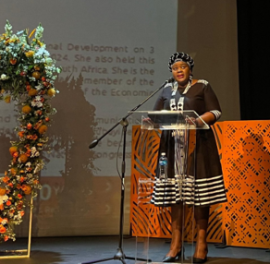
The budget was tabled by Department of Justice and Constitutional Development (DoJ&CD) Minister Mmamoloko Kubayi, in Parliament, on Wednesday afternoon.
“This allocation also includes approximately R1.4 billion from the Direct Charges allocation for the remuneration of judges.
“The OCJ will further leverage a once-off allocation for the 2026/27 Financial Year from the Criminal Assets Recovery Account [CARA] to the amount of R127 million as an additional funding mechanism to strengthen safety, security and proper court administration.
“This funding will complement existing resources to enhance operational capacity and support the continued modernisation and efficient functioning of the courts,” Kubayi said.
Additionally, the OCJ has received further support to strengthen the capacity of the courts.
“In this regard, R883.8 million is being transferred from the [department] to the OCJ over the medium term to allow the Judiciary greater control over its own administrative and financial functions.
“In addition, R687 million has been allocated to increase judicial capacity, aimed at improving court operations, administrative support and the efficiency of the court system,” the Minister said.
The Minister emphasised that the budget allocation “is not merely an administrative provision, but a strategic investment in judicial governance, the effective functioning of the Superior Courts, and the advancement of an independent and capable system of court administration”.
Judicial independence
According to the Minister, a “significant milestone” was reached on 1 April 2026 when Phase 1 of the transition to institutional independence took effect with the transfer of retained and shared services relating to the Superior Courts from the department to the OCJ.
“The services transferred to the OCJ with effect from that date include Security Services, comprising guarding services in the Superior Courts, close protection services to Judges facing threats to their lives, repairs and maintenance of security infrastructure in courts, cash-in-transit services, and reimbursement of Judges for security measures installed at their private residences.
“The transfer also included Facilities Management Services, such as day-to-day maintenance, planned maintenance, minor capital works, lease management, municipal services, and user changes on state-owned facilities.
“In addition, Library Services, including access to Juta, LexisNexis and Sabinet online publications, were transferred, together with Information and Communication Technology services relating to Court Recording Technology [CRT] and the Sexual Offences System [SOS], as well as Transcription Services,” Kubayi told Parliament.
The Minister said the transition will “further inform and be incorporated into the broader organisational structure review process”.
“The transferred shared services have been provided to the OCJ within the framework of a Service Level Agreement [SLA] and a Memorandum of Understanding [MOU] concluded between the two organisations.
“Phase 2 will focus on the promulgation of enabling legislation to establish the Judiciary as a co-equal branch of government alongside the Executive and the Legislature, and this process is expected to be completed during the 2026/27 Financial Year,” she added.
Modernising the courts
Kubayi announced that the Court Online system has been rolled out to 21 Superior Courts.
The remaining three courts namely: Thohoyandou High Court, the Constitutional Court, and the Supreme Court of Appeal - are to be completed in the new financial year.
“To further strengthen this initiative, the OCJ is advancing the development of the Criminal Module, while ensuring that court systems are securely rolled out and sustainably maintained across jurisdictions.
“The focus now is on deepening implementation, improving system utilisation, strengthening user support, and embedding Court Online as a core enabler of efficient, transparent and modern court processes,” she said.
Once-off funding allocated from the CARA will also “refresh court recording technology and support the further installation of the Scheduling and Operations Support (SOS) in identified courts”.
“This is aligned to the CARA mandate of supporting victims, strengthening law enforcement capability and combating crime.
“In the 2026/27 Financial Year, the OCJ will also prioritise the maintenance of reliable and secure courtroom operations through the assessment, maintenance and repair of existing CRT equipment across court facilities.
“These measures are intended to minimise downtime, support uninterrupted court proceedings, enhance the safety of Judicial Officers and court users, and improve overall service delivery,” Kubayi said.
Beefing up security
The Minister noted that security at courts has come under sharp scrutiny after a “combination of rising threats and intimidation directed at Presiding Officers, particularly in matters involving organised crime, gang-related activity, and high-profile litigation”.
There have been several incidents at judicial facilities, including incidents occurring at the Booysens, Athlone, Mitchells Plain and Wynberg Magistrate’s Courts in the Western Cape and another incident at Melmoth Court in KwaZulu-Natal.
“These risks are exacerbated by inconsistent and often reactive protective measures, which may not adequately address the sustained nature of threats.
“In addition, infrastructural weaknesses across court facilities, including limitations in access control and perimeter security, together with growing cybersecurity vulnerabilities linked to digital case management systems, continue to heighten the overall risk environment,” Kubayi said.
In response the OCJ is developing its security strategy to protect judicial officers and infrastructure.
“This Strategy will introduce targeted initiatives to address both physical and digital security risks, with a particular focus on improving consistency in protection measures.
“The OCJ will also monitor and track the implementation of these initiatives to ensure accountability and the effective enhancement of security across the Superior Courts,” she said. – SAnews.gov.za


