


With South Africa and the rest of the world at risk of not meeting the Sustainable Development Goals (SDGs), government has emphasised that strengthening collaboration between public and private institutions is necessary for addressing environmental sustainability.
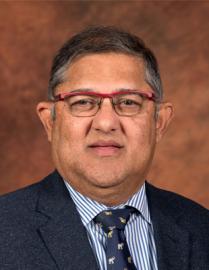
“Strong institutions, both public and private, are critical for ensuring that all people live in peaceful, just and inclusive societies,” Deputy Minister of Forestry, Fisheries and the Environment Narend Singh said on Tuesday, in Johannesburg.
He was addressing thought leaders, businesses, entrepreneurs, policy makers, and industry experts at the Future of Sustainability Conference, which aims to inspire businesses to take actionable steps towards implementing green, sustainable and ethically sound strategies.
The conferences mobilises Africa towards becoming a zero-carbon emission, waste-free, fully sustainable and smart continent.
Singh said the primary focus should be anchored towards driving stronger coordination between institutions and public-private partnerships to ensure environmental policy alignment, necessary for addressing environmental sustainability and governance.
“The world is increasingly recognising that global challenges such as climate change, environmental degradation, unsustainable consumption and production practices and resource scarcity have a significant impact on economies, human health and well-being and can only be addressed collectively through international, national and local action.
“We are confronted by the reality that some SDGs have made remarkable progress over the last 11 years, while the remaining SDGs have had mixed and uneven progress that are either progressing too slowly or regressing,” the Deputy Minister said.
SDGs call for action by all countries to improve health and education, reduce inequality, and spur economic growth – all while tackling climate change and working to preserve the oceans and forests.
“There are challenges in implementing the SDGs, including financing for their implementation, which South Africa has consistently called for, in partnership with the Global North, who have made commitments to financing for development that have not been met.
“There is a risk that development financing will be redirected to other priorities, placing countries like South Africa behind in their SDG implementation and broader development targets,” he said.
The Deputy Minister stressed that clearer accountability and improved policy implementation can positively influence environmental governance.
“For 20 years, the People and Parks Programme has strengthened partnerships between conservation authorities and communities adjacent to protected areas.
“Communities are no longer viewed merely as beneficiaries of conservation; as protection of our national heritage cannot succeed without the meaningful participation of the people who live closest to it,” he said.
Through co-management arrangements and representation in decision-making structures, communities are active partners shaping the future of protected areas.
“The Biodiversity Economy initiative has ensured that the sustainable use of our wildlife and flora directly benefits the people. Hence, our commitment to biodiversity conservation is being translated into action through ensuring that development does not come at the cost of our ecological integrity,” Singh explained.
He added that through increased industry participation, South Africa has increased investment in infrastructure for the collection, sorting, and recycling of waste.
These partnerships have driven job creation and local circular economy initiatives and support for Waste Pickers.
“The forging and strengthening of relationships and innovative partnerships between government, private sector, and civil society can potentially address challenges such as data availability, regulatory frameworks, and education, thereby fully unlocking the potential of the Environmental, Social, and Governance (ESG) framework and sustainability investing in South Africa.
“Thus, we recognize the huge opportunity such partnerships present, serving as a catalyst for sustainable development, especially if we can strengthen capacity to engage in and lead such efforts,” Singh said. -SAnews.gov.za


