


A call for the urgent strengthening of intergovernmental relations and strategic partnerships to revitalise governance and service delivery in South Africa’s metropolitan municipalities has been made.
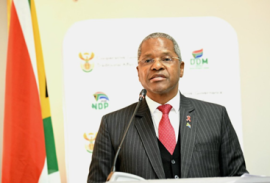
Cooperative Governance and Traditional Affairs (CoGTA) Minister, Velenkosini Hlabisa, made the call at an engagement session with mayors of metropolitan municipalities on Friday.
Held under the theme: 'Improving Intergovernmental Relations and Contracting to Improve Governance and Service Provision in Metropolitan Municipalities', the high level engagement provided a structured platform for the Minister and mayors to jointly reflect on governance and service delivery challenges.
The session also afforded the parties to strengthen intergovernmental coordination and co create practical, implementable solutions aimed at improving the performance, sustainability and resilience of metropolitan municipalities.
The engagement also took place within the broader context of preparations for the 2026/2027 Local Government Elections, underscoring the importance of governance stability, institutional readiness, transparency, and the restoration of public confidence in local government.
Addressing mayors, Hlabisa said collaborative governance across all spheres of government is essential to reversing the decline in municipal performance.
He said metropolitan municipalities, which house about 62% of the country’s population and generate more than two-thirds of its gross domestic product (GDP), remain central to South Africa's economic stability and social well-being.
“We stand at a crossroads. The time for decisive action is now. We must commit ourselves to enhancing intergovernmental relations and fostering partnerships that can revitalise our governance framework,” Hlabisa told delegates at the session held at the held at the Birchwood Hotel and OR Tambo Conference Centre in Gauteng.
Challenges
The Minister painted a bleak picture of the challenges facing metropolitan municipalities across the country, citing systemic governance, fiscal, and institutional pressures that severely hinder their ability to serve their communities effectively.
Hlabisa highlighted political instability in some metros, poor decision-making, and a lack of accountability as having a negative impact on the municipalities’ ability to effectively govern and provide sustainable and efficient service delivery.
He said these are compounded by declining revenue and low municipal collection rates, leaving many areas financially strained.
“Additionally, organisational inefficiencies and ageing infrastructure create significant barriers to delivering essential services, while rapid urbanisation heightens demand for these services, resulting in community dissatisfaction and protests.
“Furthermore, many municipalities struggle to comply with their constitutional and legislative obligations, eroding public trust and emphasising the necessity for enhanced governance and accountability mechanisms.”
Financial mismanagement also remains a major concern, with several municipalities grappling with unfunded mandates, unauthorised and wasteful expenditure, and debt to bulk suppliers, particularly Eskom and water boards.
At the same time, the Minister said, municipalities are owed money by national and provincial departments.
He said government, together with National Treasury, is currently finalising verified data on these debts and a report is expected to be presented to Cabinet by the end of April 2026.
“This is a Cabinet resolution, and rest assured that the matter will now be resolved. Ultimately, as is the case with the withholding of funds to local municipalities when certain conditions are not met, the National Treasury would now be equally able to withhold funds from the departments if they don’t pay their accounts or enter into some payment arrangements with the municipalities,” Hlabisa said.
As part of a collective approach to effectively address the challenges, Hlabisa stressed a need to strengthen intergovernmental coordination that underscores political, institutional, management, administrative, and governance collaboration.
The Minister also urged metros to leverage partnerships with the private sector to mobilise skills, funding, and technical expertise, particularly in key areas such as engineering and financial management.
District Development Model Regulations and water
Central to government’s approach is the District Development Model (DDM), which promotes integrated planning through a “One Plan, One Budget” approach across 44 districts and eight metropolitan municipalities.
Hlabisa said in April 2026, government will begin processing the gazetting of the final DDM 2026 Regulations, which have been agreed upon by all metros, including the City of Cape Town.
Hlabisa also highlighted the role of the recently established National Water Crisis Committee in addressing the country’s water challenges, noting that the first meeting was held on Wednesday, 18 March 2026, with the next meeting scheduled for Tuesday, 24 March 2026. – SAnews.gov.za


