


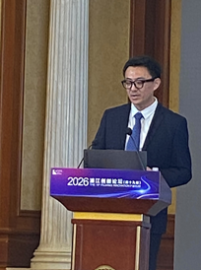
Shanghai, China -Universities and companies must work together to ensure that graduates acquire the specialised knowledge, multidisciplinary outlook and practical experience demanded by rapidly changing industries, a senior Xiaomi executive has said.
Wang Dong, the company’s Vice-President of Human Resources, said businesses should become active participants in education instead of waiting for universities to produce graduates whom they could recruit and retrain.
He was speaking during the Science and Technology Policy Thematic Forum at the Dongjiao State Guest Hotel in Shanghai on the second day of the Pujiang Innovation Forum that got underway on Friday, 11 September 2026.
South Africa is participating in the forum as the first African nation designated Country of Honour.
“Enterprises are not merely users or employers of talent; they should become active participants in the broader education and talent-development system,” Wang said.
Xiaomi is a consumer-centered electronics and smart manufacturing company.
He said advances in artificial intelligence (AI), chips, intelligent manufacturing, assisted driving and human–machine intelligence would have limited value unless they were tested in real products and industrial settings.
“Ultimately, these people and technologies must enter the real world and become a force in actual products and industries,” he said.
Xiaomi, he said, was already placing robots in automobile factories to expose the technology to actual manufacturing conditions.
“They are no longer confined to demonstrations. We want them to enter real manufacturing environments, where they must perform real tasks, work with real equipment and operate under real conditions,” Wang said.
The immediate objective was not to deploy robots as a fully productive industrial workforce because the technology was not yet capable of that. Instead, factories provided testing grounds that could guide its development.
“All our cutting-edge research and development can ultimately be implemented within the company and tested in practice,” he said.
Despite rapid technological advances, Wang said people remained central to industrial development. Xiaomi recruited approximately 3 700 hardware professionals in 2026 and 15 000 employees over the past three years across computer science, electronic information, mechanical engineering, materials science and vehicle engineering.
The company’s experience, he said, had revealed three major changes in the skills required by industry.
“The first is that professional expertise must be deeper. AI appears capable of doing almost anything, but our practical experience shows that it makes specialised expertise even more important.”
Employees, he said, also needed broader knowledge because complex products combined vehicle engineering, hardware, materials, software and algorithms. Practical ability was equally critical because industrial problems rarely had standard answers and required people to balance cost, safety, efficiency and fairness, the executive added.
Wang said companies should communicate industrial needs to universities, send business representatives into classrooms and help students understand long-term technological challenges.
“Companies should not wait until they need employees before beginning to work with universities,” he said.
Xiaomi has converted its experience in internet technology, hardware, manufacturing and industrial design into course material delivered by frontline employees. Some courses had entered university credit systems.
The company has also moved parts of its workplace engineering training into universities. Its programmes covered 15 partner institutions, attracted more than 6 000 registrations and trained over 4 000 students, with more than 100 employment offers issued.
Xiaomi’s wider university partnerships included courses, training camps, joint research centres, industry lecturers, research funds and support for commercialising research.
Wang said the company wanted students to encounter real industrial conditions, technology to strengthen talent development and graduates to adapt to employment more quickly.
“Major change should begin with concrete and practical initiatives. Xiaomi remains open to deeper engagement and collaboration between companies and universities,” he said.
South Africa hopes to secure new partnerships and take its scientific capabilities to higher levels through its participation in the forum.
In his address to the forum on Saturday, Science, Technology and Innovation Minister Professor Blade Nzimande said South Africa and China would pursue closer collaboration in “artificial intelligence, joint research centres, space science and astronomy, quantum computing, cybersecurity, public engagement, youth development and the Young Scientists Exchange Programme”.
Meanwhile, the Director-General of the Department of Science, Technology and Innovation, Mlungisi Cele, said South Africa could learn from China’s ability to connect scientific research, industrial development and private-sector investment.
READ | Call to close SA research funding gap
-SAnews.gov.za


