


National Treasury will begin directly deducting funds from national and provincial departments that owe billions of Rands to struggling municipalities.
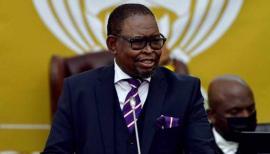
This according to Finance Minister Enoch Godongwana who delivered the department’s Budget Vote speech in Parliament on Friday.
The Minister revealed that provincial departments owe municipalities more than R14 billion, while national departments lag with R8.2 billion in outstanding debt.
“Municipalities have consistently raised concerns that where they owe organs of state, National Treasury deducts funds directly from municipal allocations. However, the same principle has not been consistently applied where national and provincial departments owe municipalities outstanding amounts.
“Consequently, National Treasury has taken a decision to deduct monies from national and provincial departments to settle outstanding debts owed to affected municipalities,” Godongwana announced.
Municipalities themselves remain under close scrutiny.
Godongwana said Treasury would continue to invoke Section 216(2) of the Constitution to withhold funds from municipalities that fail to adopt funded budgets or violate financial management laws.
“Municipal unauthorised, irregular, fruitless and wasteful expenditure remains deeply concerning. Accountability and consequence management remain critical to restoring public confidence in local government,” he said.
The Minister emphasised that reform of local government also remains an “urgent priority as municipalities continue facing infrastructure, governance and financial sustainability challenges”.
Some of the reforms being implemented relate to:
- the local government funding model;
- metro trading services;
- infrastructure delivery systems;
- municipal financial sustainability; and
- budget and grant reforms
Water and healthcare infrastructure
Godongwana told the House that government is moving towards a more “coordinated and performance-driven approach focused on infrastructure rehabilitation, maintenance, and long-term sustainability” plan on water infrastructure.
The aim of this strategy is to ensure that every Rand invested measurably improves:
- water availability;
- water quality; and
- financial sustainability.
“Firstly, government continues spending significant resources responding to water leaks and system failures, rather than addressing the root cause of the crisis, namely ageing and dilapidated water infrastructure.
“Secondly, the current water funding landscape remains fragmented across multiple grants and funding instruments, limiting coordination, reducing efficiency, and weakening the long-term sustainability of infrastructure investment,” he explained.
On the healthcare front, some R41 billion has been allocated over the medium term to support health infrastructure programmes, including the rehabilitation and replacement of dilapidated facilities.
He reiterated government’s focus on health equity despite fiscal constraints.
“Infrastructure investment remains central to economic growth, job creation and improved public services. National Treasury will continue strengthening monitoring, reporting and accountability to ensure infrastructure spending delivers visible results.
“It is imperative that we proceed with the implementation of the National Health Insurance. Notwithstanding current challenges, government must continue investing in infrastructure readiness to support a functional and sustainable health system,” Godongwana said.
He noted that the country’s healthcare system has faced several challenges including “ageing and poorly maintained facilities that require repair, refurbishment, and in some instances, complete replacement”.
“There is also a need to invest in new health facilities to address service delivery gaps arising from historical inequities and changing demographic pressures.
“As indicated in the Budget Speech, this includes investments in Dr George Mukhari Hospital, Nelson Mandela Bay Hospital and Victoria Mxenge Hospital,” the minister said.
Economic challenges
The Minister noted that “heightened geopolitical uncertainty and persistent global trade tensions” continue to create headwinds for the South African economy.
These challenges have led to marked increases in the costs of fuel, higher fertiliser costs and increased shipping expenses.
“These developments are intensifying cost-of-living pressures across economies and compounding inflationary pressures, with inflation reaching a concerning 4 per cent.
“Over the last three months, the National Treasury has made an intervention to ease the burden on consumers by announcing a temporary reduction in the general fuel levy. This has cost the fiscus approximately R17.2 billion.
“This is further disrupting an already fragile global economic environment shaped by trade wars and supply chain vulnerabilities,” he said.
Despite these global vulnerabilities, economic projections indicate steady resilience with:
- Sub-Saharan Africa projected to grow by 4.3% and
- South Africa’s economy projected to grow by 1.8% over the medium term.
“These projections reflect both continued recovery efforts across the continent and the structural constraints that continue to weigh on domestic economic performance.
“Against this backdrop, government is closely reviewing the fiscal and economic baseline assumptions underpinning the current framework.
“Necessary adjustments will be made during the Medium Term Budget Policy Statement process to ensure that fiscal policy remains responsive to evolving global and domestic conditions,” Godongwana said. – SAnews.gov.za


