


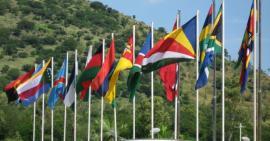
A strong attendance of Southern African Development Community (SADC) Heads of State and Government is expected at the 46th Ordinary SADC Summit in Durban on Monday, with countries unable to send their Heads of State expected to be represented by Prime Ministers and senior government officials.
Deputy Minister of International Relations and Cooperation Thandi Moraka said the region could look forward to the participation of several Heads of State, while acknowledging that Zambia would be an exception following its recent elections.
“Let's indicate that there is serious attendance of various Heads of State. Botswana will send the President, the President of Mozambique will be coming and other Member States [will be] here,” Moraka told the media on Saturday evening.
She said countries whose Heads of State were unable to attend would send Prime Ministers and other senior representatives.
Moraka said Zambia would not be represented by its Head of State, as that country is still concluding its electoral process.
“We want to take this opportunity to wish [Zambia] all the best as they continue with the process of counting, and also declaring those elections free and fair, so that we can start working towards propelling this region of ours to the next trajectory of growth,” she said.
Migration on summit agenda
Moraka also confirmed that migration would be among the issues considered by SADC Heads of State and Government during the summit.
“I want to assure you that the issue of migration will also be on the agenda, and we believe that our Heads of State will reflect on it.”
Moraka said SADC leaders would need to take collective responsibility for addressing the root causes of migration across the region.
“So SADC Heads of State will have to reflect on it, and all of us will need to take collective responsibility on how do we address issues of the causes of migration, the root causes of migration, because, like I said, migration is a global phenomenon,” she said.
She said people move between countries for different reasons, including in search of better economic opportunities, while others are forced to migrate because of insecurity and conflict.
“So how do we then dwell into those issues within our agenda of summit and make sure that we address the root causes of migration?” Moraka said.
SADC decisions binding on member states
Moraka also rejected perceptions that SADC agreements and decisions are not binding on Member States.
“We do have several treaties that are governing various fields within SADC, whether it's on migration or on climate change or any other issue, we want to really deal with this myth that indicates that SADC as an organ doesn't have binding powers to various member states,” she said.
She said member states were obliged to adhere to the regulatory frameworks and decisions agreed upon within SADC.
“Once the decision is endorsed by SADC, it becomes binding to all the member states,” Moraka said.
She said decisions were reached collectively and on the basis of consensus, after which member states moved towards implementation.
“We work together as a collective, and everything that we agree upon is on the basis of a consensus and immediately after that, we move towards implementation,” she said.
The 46th Ordinary SADC Summit of Heads of State and Government takes place in Durban on Monday, with South Africa assuming the substantive Chairship of the regional organisation. – SAnews.gov.za


