


The Southern African Development Community (SADC) is facing the risk of further deindustrialisation after manufacturing’s contribution to the regional economy declined from 11.3% of GDP in 2024 to 10.9% in 2025.
Deputy Minister of International Relations and Cooperation Thandi Moraka said the decline was moving the region further away from its target of increasing manufacturing’s contribution to 30% of Gross Domestic Product by 2030.
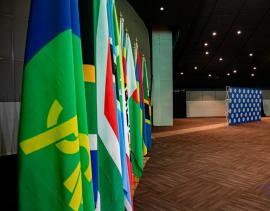
Speaking at the closing of the ninth SADC Industrialisation Week in Durban on Thursday, Moraka said reversing the trend would require deliberate policy interventions, increased investment in productive sectors, stronger public-private partnerships and greater regional cooperation.
“The challenge before us is therefore not one of potential. It is one of coordination, implementation and follow-up,” Moraka said.
The four-day gathering brought together government officials, policymakers, investors, businesses, development finance institutions, researchers and academics to discuss ways of accelerating industrial development across the region.
Moraka said SADC countries needed to move away from exporting raw materials and importing finished products at higher costs.
She identified critical minerals as a major opportunity for the region, which has significant deposits of lithium, cobalt, manganese, graphite, rare earth elements and platinum group metals.
The focus should shift from extracting these resources to processing and refining them locally and developing higher-value manufactured products.
“Beneficiation must become our collective industrial strategy,” she said, adding that investment in downstream manufacturing should be a shared priority.
Agriculture and agro-processing were highlighted as key components of the region’s industrialisation strategy.
While the number of food-insecure people in SADC fell by 16% from 69 million in 2024 to 58 million in 2025, Moraka said the figure remained a major concern. Agricultural growth also recovered to between 2% and 3% in 2025, but remained below the African Union’s 6% target.
The spread of Foot and Mouth Disease across six SADC member states was identified as another threat to livestock production, regional trade and food security.
Moraka said greater investment in agriculture, agro-processing, logistics and technology was needed to strengthen regional value chains, create jobs and reduce food losses.
Although electricity generation capacity in the region had risen to 88 202 megawatts and electricity access increased from 56% in 2024 to 60% in 2025, access remained well below the regional target of 85% by 2030.
Moraka said reliable energy, transport infrastructure, logistics and digital connectivity were essential to industrial development.
She called for greater investment in technology, artificial intelligence, advanced manufacturing and digital infrastructure, saying SADC countries should become producers and innovators rather than merely consumers of emerging technologies.
The Deputy Minister said South Africa’s forthcoming Chairship of SADC would provide an opportunity to advance the priorities discussed during the Industrialisation Week.
She said the outcomes of the Durban gathering should translate into implementation, partnerships and industrial transformation across the region. – SAnews.gov.za


