


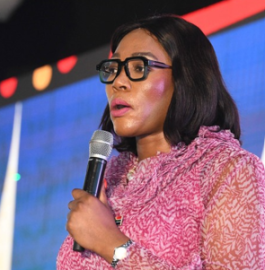
International Relations and Cooperation Deputy Minister Thandi Moraka has called on media across Southern Africa to tell a broader story of regional integration, highlighting the deep cultural, historical and economic ties that bind SADC countries together.
Moraka was speaking at the SADC Media Welcome Cocktail and Documentary Launch at the Durban ICC on Saturday evening on the eve of the 46th Ordinary Summit of SADC Heads of State and Government.
She said the region’s shared history, cultures, languages and patterns of migration had created strong connections between communities that predated the borders drawn during the colonial era.
“We need to also appreciate that we do not just share rivers and mountains. We also share cultures and languages that continue to move from KwaMashu and all the way going to Lilongwe. We are indeed one people of one region of SADC,” she said.
Moraka said these longstanding connections should inform how South Africans and citizens across the region understand migration and relations between neighbouring countries.
She reiterated that South Africa remained committed to welcoming people from across the continent, while stressing the importance of lawful migration.
“I want to reiterate the statement that is always said by our president, His Excellency Mr Cyril Ramaphosa, when he says South Africans are not xenophobic. South Africans are welcoming to those brothers and sisters who continue to come to our country through legal means,” she said.
Moraka urged the media to help promote a more informed understanding of migration and regional relations, while encouraging people entering South Africa to comply with the country’s immigration laws and regulations.
“We want to urge everyone [who] want[s] to come to South Africa to do that through legal means,” she said, calling for greater cooperation among SADC member states to “regularise issues of migration”.
She noted that migration was a global phenomenon, with people moving across borders for a range of reasons, including seeking economic opportunities and pursuing academic development.
Against this backdrop, Moraka said governments and the media had an important role to play in ensuring citizens understood migration and the regulatory frameworks governing the movement of people across borders.
Telling the wider SADC story
Moraka also challenged journalists to broaden coverage of SADC beyond crises and conflict, saying citizens needed to better understand the organisation’s work, aspirations and achievements.
“It should not be that a threshold for reporting about SADC is when there are crises around our region. Let us make it a point that we speak of the aspirations and the achievements of our community, not just only focusing on the hurdles that we continue to encounter as various member states,” she said.
She said stronger regional cooperation was essential as SADC countries confronted shared challenges, including climate change, youth unemployment and low economic growth.
For Moraka, effective communication was central to making regional integration meaningful to ordinary citizens.
“Communication is not an accessory to regional integration; it is an essential part of our regional integration.
“Citizens cannot support institutions that they do not understand. Communities cannot take ownership of initiatives they know nothing about. And young people cannot inherit values and aspirations that have never been shared with them,” she said.
The Deputy Minister called on journalists, editors, broadcasters, photographers, content creators and communicators covering SADC to help bridge the gap between regional institutions and citizens.
“You help bridge the distance between institutions and citizens. You help transform information into understanding. And you help ensure that regional integration remains people-centred rather than institution-centred,” she said.
Decades of regional solidarity
Moraka also launched the documentary, 30 Years of South Africa's Contribution Towards Building a Common Future in the Southern African Development Community (SADC).
The documentary reflects on South Africa’s three decades of participation in SADC and seeks to preserve the history of regional solidarity while reconnecting younger generations with the organisation’s significance.
Moraka said South Africa’s democratic journey had been strengthened by the support of countries across the region and that the country’s future remained closely linked to the prosperity and stability of Southern Africa.
She urged media organisations to use the documentary to broaden public understanding of the region as South Africa assumes the substantive Chairship of SADC.
“Today, we want to entrust this story to you as various members of the media. Please take this documentary and turn it widely to the entire community of SADC. Tell it in an honest way.
“This is the SADC story that must be protected and preserved by all of us, and ultimately the story of the people of one region of SADC. And it is a story that is worth telling,” she said.
Moraka said the documentary should not mark the end of the conversation on regional integration, but rather the beginning of a wider dialogue that continues beyond the SADC Summit.
She expressed appreciation to the German Development Cooperation (GIZ), through the Strengthening National-Regional Linkages in SADC Programme, as well as DIRCO officials, interview participants and production teams who contributed to the documentary.
South Africa is hosting the 46th Ordinary SADC Summit in Durban, where regional leaders are expected to deliberate on peace and security, economic development, regional integration and other matters affecting Southern Africa. – SAnews.gov.za


