


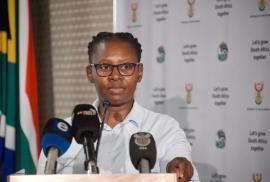
By Nomonde Mnukwa
“An unjust law is no law at all,” this is a famous maxim attributed to St. Augustine; one of the most influential philosophers in history. It was also repeated by a well-known civil rights movement leader and activist Martin Luther King Jr who even took it further to say people have a moral responsibility to non-violently disobey unjust laws as they go against human dignity and fairness.
These words ring true to the events of 9 August 1956 where more than 20 000 women publicly declared that they would not be treated like slaves in the country of their birth. Those brave women who gathered peacefully on that day were protesting unjust pass laws that restricted the movement of Black people and dictated where they could work and live.
This year South Africa marks 70 years since the 1956 historic march to the Union Buildings, which was the seat of the apartheid government. The march was one of the largest in the country and it brought together women from different backgrounds and races to fight against pass laws.
That famous march led by Lilian Ngoyi, Helen Joseph, Rahima Moosa and Sophia Williams-De Bruyn, together with the continued pressure that followed, forced the apartheid government to repeal the pass laws through the Abolition of Influx Control Act in 1986. The repeal of this law and many others that followed marked the beginning of the collapse of the apartheid government and helped pave the way for the new democratic dispensation in 1994.
The dawn of democracy further set in motion a deliberate effort to repeal discriminatory laws and replace them with laws that promote equality, dignity, and human rights. Among the important achievements of democratic South Africa has been the development of laws and policies intended to protect women, advance their rights and increase their participation in society. In 1995, for instance, South Africa ratified the Convention on the Elimination of All Forms of Discrimination against Women and the Beijing Declaration and Platform for Action.
The country has also aligned itself with important African and regional commitments, including the African Union’s Maputo Protocol and the SADC Protocol on Gender and Development, both which seek to promote and protect the rights of women.
As a signatory and active participant in the Beijing Declaration and Platform for Action, South Africa provides progress reports to the United Nations Commission on the Status of Women through the Department of Women, Youth and Persons with Disabilities. Last year, South Africa took part in the 69th Session of the United Nations Commission on the Status of Women, reinforcing our commitment to gender equality.
To monitor and promote the implementation of laws and policies on women’s rights and empowerment, government established the Commission for Gender Equality in 1996. This institution continues to advocate, educate and hold society accountable on gender equality. Parliament has also passed important laws to protect women from discrimination and violence, including the Promotion of Equality and Prevention of Unfair Discrimination Act of 2000, the Domestic Violence Act of 1998 and the Choice on Termination of Pregnancy Act of 1996.
The Sexual Offences Act of 1957, as well as other laws such as the Marriage Act of 1961 and the Divorce Act of 1979 were also amended to provide women with greater protection against violence and exploitation. This includes the Tax Act of 1962 which treated women unfairly before 1994. Through this Act, married women were often taxed more than married men and were placed in different tax categories. They also received smaller tax rebates and had fewer benefits when it came to retirement savings and supporting dependants.
As government we also understood that gender equality is incomplete without the full participation of women in the economy of this country. To realise this, government passed the Employment Equity Act of 1998, Broad-Based Black Economic Empowerment Act of 2003 and the Labour Relations Act of 1995.
All these changes were made possible through the cooperation of the three branches of government, the Legislature, the Executive and the Judiciary. By working together, these branches have helped protect the rights of people as set out in the Bill of Rights.
As we commemorate the 70th anniversary, we are encouraged that most of the demands of the women who marched in 1956 have come to fruition and have been incorporated or given effect through the Constitution and other legislation. Many of the basic rights we continue to enjoy were denied to the majority of the people of this country and we will continue to address the historic injustices against women which we inherited in 1994.
*Mnukwa is the Acting Director-General of the Government Communication and Information System


