


Government and the private sector have launched the EmpowerHer Market Trade Fair to advance women’s economic empowerment by creating opportunities for women-owned businesses to showcase their products and services, access new markets, establish business partnerships, and engage with potential investors and customers.
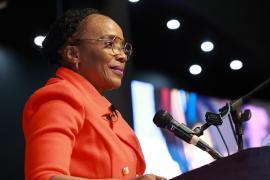
Government collaborated with ABSA on the initiative, which was launched by the Minister in the Presidency responsible for Women, Youth and Persons with Disabilities, Sindisiwe Chikunga, on Saturday in Durban to mark the start of 2026 Women’s Month.
Chikunga emphasised the importance of government and the private sector working together to empower women entrepreneurs, who continue to face structural barriers that limit their ability to start, sustain, grow, and compete in business.
These barriers include limited access to markets and procurement, finance and investment, business development support, technology, information, networks, and supply-chain opportunities.
“Many women entrepreneurs operate in informal or small-scale markets, and struggle to transition into sustainable, commercially viable enterprises.
“There is a persistent gap between women-owned businesses and large corporations, between women-owned businesses and government procurement systems, and between women-owned businesses and mainstream markets — which results in limited market access and insufficient participation in high-value sectors and supply chains,” the Minister said.
Chikunga explained that the Women in Trade Fair seeks to address the disconnect between women entrepreneurs and viable markets by creating a platform that connects women-owned businesses with buyers, investors, government, corporates, financial institutions, and ecosystem partners.
“We aim to move beyond showcasing products, towards actual commercial transactions, investment, procurement opportunities, business partnerships, and long-term market linkages.
“This Trade Fair is not merely an exhibition — it is an economic empowerment and market access intervention. It seeks to achieve visibility, market access, business deals, procurement, investment, enterprise growth, job creation, and economic empowerment,” the Minister said.
Entrepreneurs on the exhibition floor had access to business pitch sessions, finance and development finance desks, procurement and buyer discussions, and support clinics.
“Too often, women-owned enterprises are visible in policy language, but invisible in actual value chains. They are invited to events but not linked to buyers. They are encouraged to formalise but not supported through the compliance burden. They are told to access finance but not assisted to meet financing criteria.
“We are here to insist that this must change. Today’s programme must therefore shift from once-off visibility to structured economic participation,” Chikunga said.
The Minister pointed out that when women-owned businesses are supported to grow, households, communities, local economies, and the country all benefit.
“This is particularly important in the context of youth and persons with disabilities. Today’s programme deliberately includes women-owned enterprises, youth-owned enterprises, and enterprises owned by or inclusive of persons with disabilities.
“A truly transformed economy must recognise the different barriers faced by different groups, while building pathways that allow all to participate meaningfully,” the Minister said.
She said that, for persons with disabilities, inclusion means accessibility, reasonable accommodation, and real economic opportunity.
“For young women, it means support to enter markets early, to build enterprise capability, and to participate in emerging sectors. For women in rural and township economies, it means bringing support closer to where economic activity happens — not expecting entrepreneurs to carry every institutional cost alone.
“This is why coordination matters. Fragmented support will only produce fragmented outcomes. Today, we are saying that the State, working with partners, must become better at joining the dots,” the Minister said. -SAnews.gov.za


