


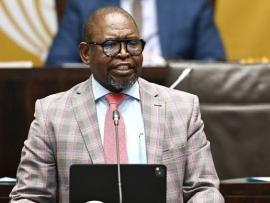
Amid persistent global economic uncertainty, Minister of Finance Enoch Godongwana has called on the Southern African Development Community (SADC) to position the region as a competitive producer through greater cooperation and coordinated policy action.
Speaking at the SADC Committee of Ministers of Finance and Investment meeting in Harare, Zimbabwe, Godongwana said member states should adopt coordinated and forward-looking economic and policy responses to protect their economies against global shocks.
"Importantly, this will require leveraging critical minerals to drive industrialisation, promoting food security through cooperation in agricultural production and agro-processing, deepening intra-regional trade integration, and strengthening resilient infrastructure and supply chains," Godongwana said on Thursday.
He stressed that achieving these objectives will require sustained political leadership, stronger institutional coordination and a shift from commitments to implementation.
"In this regard, we will need to prioritise a select set of high-impact actions. Amongst these, for example, are the trade facilitation reforms, development of transport and logistics corridors, seamless transmission of digital payments, including reducing the cost of remittances across the region," the Minister said.
Godongwana also warned that the changing global development finance landscape poses a significant risk to the region, particularly as international aid to Sub-Saharan Africa continues to decline.
"This shifting landscape calls for a structural transformation in development finance across the SADC region.
"Beyond protecting critical social sectors, there is an urgent need to pivot toward more sustainable and diversified financing models, leveraging blended finance, public-private partnerships (PPPs), and deeper private sector participation to offset declining donor flows," he said.
According to the Minister, initial estimates by the International Monetary Fund (IMF) suggest bilateral aid could contract by between 16% and 28% from 2025.
"These cuts are donor-driven and broad-based in scope and not a reflection of individual country performance. Unlike previous downturns, the current reductions are large and highly unpredictable, representing a systemic and potentially lasting shock rather than a temporary disruption.
“The poorest and most fragile countries will be disproportionately affected," the Minister said. -SAnews.gov.za


