


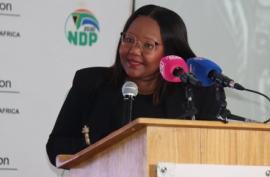
Basic Education Minister Siviwe Gwarube has called on learner leaders from across South Africa to embrace their role as custodians of democracy, champions of safe and inclusive schools, and leaders capable of shaping the future of education and society.
Addressing the 2026 National Learner Leadership Summit on Wednesday in Benoni, Ekurhuleni, Minister Gwarube reflected on the significance of South Africa commemorating 50 years since the 1976 Soweto Uprising and challenged learner leaders to honour that legacy through active leadership, service and civic participation.
The summit held under the theme “Born of Resilience, Driven by Purpose: Leading the Future of Learning,” brought together learner leaders from all nine provinces, government representatives, development partners, civil society organisations and education stakeholders to strengthen learner voice, democratic participation and leadership within the education sector.
In her address, Minister Gwarube noted that while the challenges facing today's generation differ from those confronted by the youth of 1976, they remain equally urgent.
These include bullying, violence, gender-based violence, substance abuse, cyberbullying, misinformation, mental health challenges and growing uncertainty about the future. She urged learner leaders to become agents of positive change within their schools and communities.
A key message emerging from the Summit was that leadership begins with service. Learner leaders were encouraged to use their influence to protect vulnerable learners, promote inclusion and build school environments where every learner feels safe, respected and valued.
The Minister emphasised that the true measure of leadership is not status or popularity, but the ability to uplift others and strengthen communities.
The Department further reaffirmed its commitment to strengthening school safety through initiatives such as the Safe Schools Protocol and partnerships with the South African Police Service.
Delegates heard that creating safer schools requires more than policies and programmes; it requires a culture of respect, accountability, empathy and care, led by learners themselves.
The Summit also highlighted the importance of democratic participation and active citizenship as fundamental pillars of learner leadership.
Delivering a keynote address on the importance of voting as a constitutional right and civic responsibility, the Chairperson of the Electoral Commission of South Africa (IEC), Mosotho Moepya, reminded learner leaders that democracy must be renewed and protected by every generation.
Drawing on the lessons of South Africa's democratic journey, Moepya encouraged young people to reject apathy and become ambassadors for democratic participation, information integrity and responsible citizenship within their schools and communities.
Quoting the late former President Nelson Mandela, Moepya reminded delegates that, “An election is not just about choosing leaders; it is a celebration of our hard-won freedom and a powerful declaration that we are the masters of our own destiny.”
Delegates were reminded that many of the issues affecting communities, including access to services, safety, infrastructure and opportunities for young people, are influenced by democratic participation and accountable governance.
Learner leaders were therefore encouraged to see a direct connection between the leadership they exercise within schools today and the broader leadership responsibilities they may assume in society tomorrow.
Gwarube noted that the freedoms enjoyed by young South Africans today were secured through the courage and sacrifices of previous generations and must be protected through responsible citizenship and active participation in democratic processes.
“The youth of 1976 fought for access to education, dignity and democratic freedoms. The responsibility of today's generation is to protect those gains, strengthen democratic participation, reject bullying and violence, champion inclusion, and use their voices to shape a better future.
“The future of South Africa is already here, and it is represented by the young leaders gathered at this Summit,” Gwarube said.
The department expressed its appreciation to all partners who contributed to the success of the summit, including the Electoral Commission of South Africa, UNICEF, the National Education Collaboration Trust (NECT), the Agape Youth Movement, provincial education departments, educators, school governing bodies and learner leadership structures from across the country.
The department added that the continued support strengthens efforts to develop a generation of active citizens, ethical leaders and engaged learners committed to building a better South Africa. – SAnews.gov.za


