


Parliament's Portfolio Committee on Public Service and Administration has called for supply chain management officials across government to be prioritised for lifestyle audits.
The committee made the call during a meeting on Wednesday where it received progress reports from the Eastern Cape, Free State and Mpumalanga on the implementation of lifestyle audits and efforts to strengthen ethics and integrity management systems in provincial administrations. Limpopo failed to respond to the committee's invitation to appear before it.
While welcoming the steps taken by provinces to implement lifestyle audits, committee members expressed concern over what they described as inconsistent and uneven implementation across the country.
Members said oversight visits and presentations continue to reveal significant differences in how provinces approach the audits, undermining efforts to establish a credible anti-corruption framework.
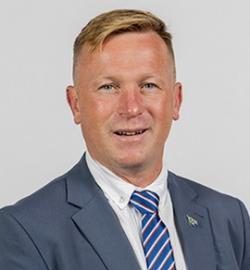
Committee Chairperson Jan de Villiers said previous briefings by the Special Investigating Unit and the Department of Public Service and Administration had highlighted policy gaps that require urgent attention to ensure a standardised approach.
"Our main concern is to ensure that public money is protected from corrupt activity," De Villiers said.
"We want to find and stop corruption. Essentially, we want to stop taxpayers' money from illicitly flowing towards corrupt activities in departments."
He said evidence emerging from the Madlanga Commission had exposed weaknesses in ethical and integrity systems throughout the public administration, making it necessary to strengthen safeguards against corruption.
De Villiers singled out supply chain management units as a critical area of concern, suggesting that officials working in procurement should be among the first to undergo lifestyle audits.
"It seems to me that, regardless of the form of corruption, or what a public service employee who is guilty of corruption may be trying to do, it can almost never happen without some person in supply chain management working with them," he said.
"Ultimately, funds, tenders, appointing service providers and related processes tend to flow through supply chain management offices. So, should we not start with lifestyle audits on every single person in supply chain management before we do anything else?”
Committee members also raised concerns about delays in vetting senior managers, noting that backlogs within the State Security Agency and staff shortages continue to hamper the process.
Questions were also raised about the apparent lack of consequences for officials implicated in wrongdoing, while some members criticised provinces for repeatedly citing capacity constraints as justification for slow implementation.
The committee reminded provinces that lifestyle audits were introduced as a serious anti-corruption intervention and cannot be treated as “a mere guideline that can be delayed or deferred”.
Members stressed that the audits must deliver visible results and contribute meaningfully to detecting and preventing corruption.
De Villiers warned that corruption has a direct impact on service delivery, particularly in sectors serving vulnerable citizens.
"The reality is that the corruption we have seen across the state is often at its worst in provincial health departments and provincial education departments. These are also the areas where our most vulnerable citizens are – our children and patients,” he said.
He added that efforts to identify unexplained wealth, uncover ghost workers and root out corruption were essential to protecting public resources and improving government services. – SAnews.gov.za


