


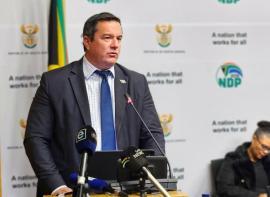
South Africa is successfully maintaining key livestock export markets despite the ongoing Foot and Mouth Disease (FMD) outbreak, says Agriculture Minister John Steenhuisen.
Speaking at a media briefing in Parliament on Monday, Steenhuisen said retaining and expanding export markets was critical for supporting farm incomes, sustaining processing facilities and protecting jobs across the agricultural value chain.
The Minister said South Africa's response to FMD had entered a new phase, with record vaccine acquisitions, intensified vaccination efforts and sustained engagement with international trading partners.
Since February, South Africa has procured 13.5 million doses of FMD vaccine and vaccinated nearly 4.4 million animals nationwide, making it the largest vaccine acquisition programme ever undertaken by the state.
A further 3.5 million vaccine doses arrived in the country last week, while regulatory approval has been granted for the importation of an additional 14 million doses to support booster vaccinations.
Government has invested R494 million in vaccine procurement and deployment to date.
"Protecting the national cattle population, safeguarding jobs, preserving food security and restoring confidence in the livestock economy are national priorities," Steenhuisen said.
While acknowledging the significant hardship experienced by farmers due to movement restrictions, higher feed costs and market uncertainty, the Minister said government had shouldered the financial burden of the vaccination campaign to reduce the impact of the outbreak on producers.
He paid tribute to farmers who had complied with movement controls and vaccination programmes despite facing severe financial pressure.
"Their cooperation has been essential to containing the outbreak and protecting the broader livestock industry," he said.
A key focus of government's response has been ensuring that disease-control measures do not unnecessarily disrupt trade.
Steenhuisen said South Africa had worked extensively with international trading partners to maintain market access for livestock products through science-based risk management measures.
As a result, Jordan remains open to South African exports and shipments are already taking place.
The United Arab Emirates continues to accept South African products under updated certification arrangements, while Hong Kong remains open for red meat exports. Kuwait also remains open under agreed conditions, and discussions with Qatar are progressing positively.
South Africa is expected to engage additional markets this week, including Tunisia, Lebanon, Egypt, Bahrain, Oman and Saudi Arabia, with proposals aimed at facilitating continued trade.
The livestock sector forms part of a broader agricultural industry that continues to perform strongly despite disease outbreaks, severe weather events and logistical challenges.
Agricultural exports grew by 7% over the past year, while the sector generated a trade surplus of approximately US$7.3 billion in 2025, an increase of 18% compared with the previous year.
The citrus industry recorded one of its strongest export performances on record during the same period.
Steenhuisen highlighted South Africa's role in strengthening regional cooperation on animal health following a recent Southern African Development Community (SADC) ministerial meeting in Zimbabwe.
South Africa welcomed the decision by SADC Ministers and livestock experts to prioritise the development of a Regional Coordination Framework for Foot and Mouth Disease control.
The proposed framework aims to improve cooperation across borders through progressive buffer zoning, coordinated vaccination efforts, strengthened surveillance systems, biosecurity corridors and compartmentalisation models designed to limit the spread of disease while protecting trade.
"In a region where livestock mobility, wildlife interfaces and cross-border trade are deeply interconnected, stronger regional coordination is critical," Steenhuisen said.
He added that the framework would help move Southern Africa away from fragmented national responses towards a coordinated and preventative regional biosecurity system.
Domestically, government is also expanding diagnostic capacity through additional laboratory resources, recruitment of veterinary personnel and improved provincial coordination.
Steenhuisen said the country was steadily transitioning from a reactive disease-control system to a proactive and risk-based biosecurity model, supported by growing collaboration between government, producers, veterinarians, feedlots, processors and commodity organisations.
A public-private biosecurity framework is expected to be launched in the coming weeks to formalise these partnerships and strengthen future disease preparedness. – SAnews.gov.za


