


An amount of R12.3 billion has been allocated to infrastructure grants to fund 70 bulk water projects and 341 water services initiatives across all provinces, as government intensifies efforts to stabilise struggling municipal systems.
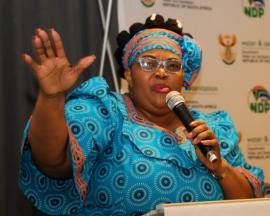
Presenting the Budget Vote for the Department of Water and Sanitation (DWS) in Parliament on Friday, Minister Pemmy Majodina announced that the funding will be channelled through the Regional Bulk Infrastructure Grant (RBIG) and the Water Services Infrastructure Grant (WSIG).
The Minister said RBIG will fund 70 bulk infrastructure projects across all nine provinces, while the WSIG will support 341 projects, including 175 planned for completion in the current financial year.
“Grants will also be used to leverage additional investment by unlocking partnerships with the private sector and development institutions. DWS will make increasing use of its Water Boards and other implementing agents, such as the DBSA [Development Bank of Southern Africa] to assist struggling municipalities to implement projects more expeditiously,” the Minister said.
Major projects completed in 2025/26 include the R759 million Klipdrift Water Treatment Works in Hammanskraal (now producing its full 50 megalitres per day); Phase 1 of the R4.8 billion Giyani Water Project (24 of 55 villages reticulated); the R736 million Babanana Bulk Water Pipeline in Limpopo; Phase 3 of the R1.5 billion Maphumulo Bulk Water Scheme in KwaZulu-Natal, and the R351 million Moretele South Bulk Water Supply Scheme in the North West.
Among major projects planned for completion in 2026/27 include four bulk water schemes worth R2.24 billion in Chris Hani District Municipality; the R2 billion Loskop Regional Bulk Water Supply Scheme in Mpumalanga; the R1.1 billion George Water Supply Project in the Western Cape; and multiple North West schemes, totaling over R2.3 billion.
The allocation comes amid a constrained fiscal environment, with the department’s overall budget declining from R23.4 billion in 2025/26 to R22 billion in the current cycle.
Majodina acknowledged that while South Africa has made notable progress in expanding access to water and sanitation since 1994, the reliability of municipal water services has deteriorated significantly.
She said the department will intensify support and intervention in the 107 worst-performing municipalities, identified through the 2023 Blue Drop and 2025 Green Drop assessments. The recent findings show a worsening trend in wastewater management, with systems classified as critical increasing from 39% in 2022 to 47% in 2025.
Debts owed by municipalities to water boards
The Minister raised concern over debts owed by municipalities to water boards, noting that as of 31 March 2026, municipalities owed water boards more than R27 billion, including R23 billion in overdue debt, a deterioration from figures recorded in mid-2025.
She said water boards have responded by implementing stricter credit control measures, including throttling water supply to defaulting municipalities and, in extreme cases, attaching municipal bank accounts.
“National Treasury has implemented the withholding of equitable share allocations for the worst non-paying municipalities, and this has affected 62 municipalities to date,” the Minister said.
The Minister has also led coordinated engagements with Premiers, MECs for Cooperative Governance and Traditional Affairs (CoGTA), and Mayors to improve payment compliance and restore financial stability in the sector.
Echoing concerns raised by President Cyril Ramaphosa during His State of the Nation Address in February, the Minister said many communities now have infrastructure in place, but continue to experience water shortages, poor quality supply, and sewage spillages.
“The reliability of municipal water services has declined sharply, with worsening water services disruptions, sewage spillages, and poor water quality in many areas. In other words, while most people now have access to a tap, water often does not come out of the tap or is not safe to drink. This remain an undeniable truth which we are attending to.
“In the spirit of co-operative governance, the President met with mayors on 30 April 2026 to discuss the National Water Action Plan. He said that the plan addresses the root causes of the crisis in municipal water services, including reforms to the way in which the services are delivered, to improve their financial sustainability, and to ensure that they are effectively managed by staff with the required competencies,” Majodina said. – SAnews.gov.za


