


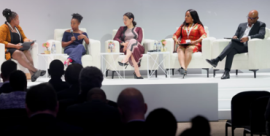
South Africa’s long-standing economic partnership with Europe continues to play a pivotal role in driving trade, investment, and infrastructure development, with leaders highlighting the need to sustain momentum and deepen collaboration to unlock growth.
This emerged during a high-level panel on Economic Diplomacy and Regional Cooperation at the Sixth South Africa Investment Conference on Tuesday.
European Union (EU) Ambassador to South Africa Sandra Kramer underscored the scale of the relationship, describing Europe as South Africa’s largest trading and investment partner.
“About 23% of trade in goods is between South Africa and the EU, while around 43% of foreign direct investment comes from Europe,” Kramer said.
She added that approximately 1 700 European companies operate in South Africa, supporting over 500 000 direct jobs and an estimated 1.6 million indirect jobs.
Kramer pointed to the Southern African Development Community–European Union Economic Partnership Agreement as a cornerstone of the relationship, noting that it allows 98% of South African goods to enter the EU market duty-free.
“That gives South Africa access to a market of 450 million people,” she said.
French Ambassador David Martinon highlighted the depth of bilateral ties, revealing that French companies have invested around €66 billion in South Africa since 2019 across sectors including energy, manufacturing, tourism, and agriculture.
“These investments span the entire economy, from industrial projects to agri-processing and tourism developments,” Martinon said, adding that French firms continue to expand their footprint in the country.
From a development finance perspective, Boitumelo Mosako said European funding has played a catalytic role in enabling large-scale infrastructure and development projects.
“European partners don’t just provide funding, they create multiplier effects that unlock further investment,” Mosako, who is the CEO of the Development Bank of Southern Africa, said.
She cited a €200 million green bond backed by the French Development Bank and significant funding from institutions such as the European Investment Bank as examples of how concessional finance has helped scale infrastructure projects in energy, transport, and water.
Mosako added that partnerships with European institutions have also strengthened project preparation and implementation capacity across the region, including cross-border infrastructure initiatives.
Kramer said recent initiatives such as the EU’s €12 billion Global Gateway investment package and the Clean Trade and Investment Partnership are expected to further accelerate investment in green industrialisation, digital infrastructure, and vaccine production.
“We have seen over 200 new European companies entering South Africa in recent years, which signals strong confidence in the country’s investment case,” she said.
Panellists agreed that Europe remains a reliable long-term partner in South Africa’s development agenda, particularly in advancing infrastructure, supporting industrialisation, and driving the transition to a green economy.
They emphasised the importance of maintaining the momentum built through recent engagements, including South Africa’s G20 Presidency, to translate commitments into tangible projects that boost economic growth and regional integration.
The session was moderated by Trudi Makhaya from the Boston Consulting Group.
– SAnews.gov.za


