


No country can expect to reach its development goals without investing in its science, technology and innovation (STI) capabilities.
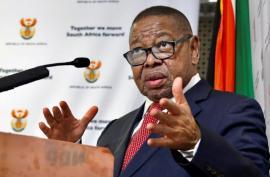
This is according to the Minister of Science, Technology and Innovation, Professor Blade Nzimande, during his speech at this year’s Basic Education Sector Lekgotla, which began today in Benoni, Gauteng.
“As part of enhancing our country’s ability to respond to our historical and contemporary challenges, over the past three decades, we have made significant investments with the view of strengthening our country’s STI capabilities.”
He told delegates that South Africa possesses the largest public science system in Africa, which is backed by institutions such as the Council for Scientific and Industrial Research (CSIR), the Human Sciences Research Council (HSRC), the National Research Foundation (NRF), and the South African National Space Agency (SANSA).
He said the country hosts two of the world’s largest scientific instruments – the Square Kilometre Array (SKA) and the Southern African Large Telescope (SALT) – noting that the SKA has also been used to support maths and science education in rural areas such as Carnarvon in the Northern Cape.
The Minister also highlighted the Nuclear Medicine Research Infrastructure (NuMeRI) facility at Steve Biko Hospital, which supports drug development, clinical research and advanced diagnostics for diseases including cancer and tuberculosis.
“Why am I sharing all this with you? To make the point that one of the reasons why our country is an emerging global leader in the science domains I have mentioned is because of the basic training in maths and science that our young people receive through our public education system.”
The Minister emphasised the importance of establishing a future-proof education system, especially as the world navigates one of the most unpredictable periods in human history.
He stated that this is marked by armed conflicts, the threat of pandemics, economic and digital inequality, climate change, biodiversity loss, disruptive technologies, and an increasing threat to multilateralism.
“All these challenges have made the future of humanity increasingly uncertain and have forced us to rethink not only the kind of economic systems we would need to build a shared future for humanity, but also what kind of knowledge and skills we would need to realise such a future.”
In response, he stated that the country’s Decadal Plan for Science, Technology, and Innovation (2022-2032) promotes a future-ready education.
“By this, we do not mean the kind of education that only anticipates the future, but also one that shapes it.”
He believes that education should emphasise digital and future skills for young people, particularly in emerging fields such as artificial intelligence, robotics, biotechnology, and the creation of digital solutions.
“Equally important is the need to complement classroom-based instruction with extracurricular activities that stretch their minds and provide learners with a platform to put into practice the core scientific principles from the classroom in problem-solving scenarios.”
The department is rolling out several initiatives aimed at future-proofing education by equipping learners with digital and future skills, the Minister said.
These include support for STEM Olympiads that allow learners to engage directly with science, technology, engineering and mathematics (STEM), while building analytical and problem-solving skills.
At the national level, the programmes are led by the South African Mathematics Foundation and the Eskom Expo, which run initiatives such as the South African Maths Olympiad and the International Science Fair.
The Minister said the department would continue supporting these efforts, with a growing focus on grassroots coaching and mentoring, as well as introducing maths and science at the early childhood development level to address long-standing fears around these subjects.
He cited concerns raised by Basic Education Minister Siviwe Gwarube that only 34% of 2025 matric candidates wrote mathematics, and highlighted practical interventions, including support to a KwaZulu-Natal primary school whose learners recently placed second in a coding and robotics competition.
He also raised the possibility of a special programme to help underperforming matric learners obtain their certificates and prepare for further study.
“I believe that as government and as a country, we must demonstrate a greater appreciation for the role and contribution of our educators.” – SAnews.gov.za


