


By Bernice Swarts
The Department of Forestry, Fisheries and the Environment (DFFE) is concluding National Environment Month with a renewed commitment to strengthening collaboration among all three spheres of government, government entities, the private sector, research institutions, academia and civil society to tackle pollution and improve South Africa's air quality.
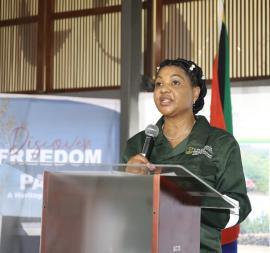
This commitment is one of the key outcomes of the National Priority Air Quality Summit, recently held in Rustenburg, North West. Led by the DFFE, the summit brought together air quality officials and stakeholders from across the country to strengthen intergovernmental coordination and cooperation on air quality management in South Africa's Priority Areas.
The summit also provided an important platform for sharing experiences, best practices and innovative solutions to challenges experienced in the implementation of Priority Area Air Quality Management Plans.
When opening the summit, I challenged delegates to work together to find practical solutions to our country's air pollution challenges. I am encouraged by a range of interventions explored to improve air quality and reduce pollution in our communities.
One of the interventions discussed was the role of greening initiatives in improving environmental quality. The DFFE is already implementing an ambitious programme to plant ten million trees on Heritage Day, 24 September 2026, under President Cyril Ramaphosa's Presidential One Billion Trees Programme.
Through this initiative, government aims to plant one billion trees over the coming years to improve air quality, combat climate change and create greener communities.
We are excited to be driving this important programme and building on the success of our campaign to plant one million trees in a single day on Heritage Day last year.
The National Priority Air Quality Summit took place during Environment Month, a period when we reflect on our shared responsibility to protect the environment and improve the quality of life of all South Africans. It also coincides with Youth Month, reminding us that the decisions we make today will directly affect the health, wellbeing and opportunities of future generations.
Section 24 of the Constitution of the Republic of South Africa guarantees everyone the right to an environment that is not harmful to their health or wellbeing. This constitutional right places a responsibility on all of us - government, industry, civil society, academia and citizens - to work together to reduce air pollution, improve the quality of the air we breathe.
The theme of this year's Summit, “Collective Accountability for Clean Air: Clean Air is Not a Privilege, but a Fundamental Right “– captures the spirit of our Constitution. It recognizes air quality as a basic human right, ensuring that there is accountability across government, industries, and civil society in prioritising our wellbeing as a collective.
Poor air quality affects the most vulnerable members of our society disproportionately. Children, the elderly, and individuals with existing respiratory and cardiovascular illnesses often bear the greatest burden of pollution. Clean air therefore remains fundamental to achieving sustainable development, improving public health, reducing inequality and building resilient communities.
The 2026 Priority Area Summit focused on several key themes, including:
• Building technical capacity among government institutions and stakeholders within the new priority area regulatory framework;
• Assessing lessons learnt from the implementation of the Highveld Priority Area Air Quality Management Plan;
• Using those lessons to better prepare for the Vaal Triangle Airshed Priority Area and Waterberg-Bojanala priority areas.
The summit also focused on the implementation of the recently enacted National Dust Control Regulations, which seek to shift dust management from a reactive to a proactive approach. These discussions are critical as they aim to strengthen implementation capacity, improve accountability and accelerate measurable improvements in air quality management.
While the Summit acknowledged that notable progress has been achieved through enhanced monitoring networks, improved planning and increased stakeholder engagement, many communities continue to experience unacceptable levels of air pollution. We recognise the concerns expressed by communities regarding emissions from industrial activities, domestic fuel burning, transportation, waste burning and other pollution sources.
We also acknowledge concerns raised by civil society organisations regarding the pace of implementation, transparency, compliance and accountability. Government takes these concerns seriously, and the Summit provided an opportunity to move beyond identifying challenges towards developing practical and implementable solutions.
My message remains clear: government cannot solve air pollution challenges alone. Industry, civil society, academia and communities all have important roles to play.
I also acknowledge and appreciate the support government has received through its partnership with the Clean Air Fund. This philanthropic organisation has partnered with the department since 2024 and has supported our Priority Area Summits since then.
The Clean Air Fund deployed 200 low-cost air quality sensors across Gauteng, North West and the Free State during 2025 and is working with the department to install additional sensors across the country. The organisation is also supporting municipalities and the department through public outreach and community awareness programmes, as well as strengthening the development of air quality management plans.
In addition, the Clean Air Fund has supported research institutions such as the South African Medical Research Council in conducting studies that help government better understand the health impacts of air pollution on communities. This evidence strengthens the case for urgent action to address pollution in Priority Areas.
These partnerships are unlocking valuable opportunities and enabling government to accelerate programmes that were previously constrained by limited resources. We encourage more stakeholders to identify opportunities for collaboration and partner with government through public-private partnerships to strengthen our collective efforts to improve air quality.
In conclusion, I want to emphasise that our communities have a right to know what they are breathing.
We recognise the growing importance of citizen science and community-based environmental monitoring. Around the world, communities are becoming active participants in environmental observation and data collection. Through the South African Air Quality Information System (SAAQIS), government continues to improve public access to air quality information and strengthen environmental transparency.
We have also enhanced systems that allow members of the public to report air pollution incidents and complaints online, enabling quicker responses and improved accountability.
However, communities must not only be informed - they must also be empowered to participate meaningfully in decisions that affect their health and environment. To this end, the department will host community air quality dialogues across South Africa, especially at all Priority Areas. We will expand public awareness and education initiatives on air quality and pollution. We will increase the number of Air Quality Dialogues across the country and ensure that information is communicated in all official languages so that communities are fully informed and able to participate.
The Summit further resolved to develop a clear and practical plan to strengthen community participation in efforts to reduce pollution and improve air quality. I therefore call on all South Africans to join government, industry and civil society in tackling air pollution and building healthier, cleaner and more sustainable communities for current and future generations.
*Swarts is the Deputy Minister of Forestry, Fisheries and the Environment


