


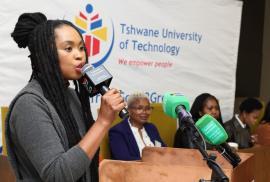
Established women media professionals and aspiring journalists and communication students gathered in Pretoria last week for the annual Women in Media and Communication Speed Mentoring Session - an initiative aimed at equipping young women with the skills, confidence and knowledge needed to build successful careers in the media and communications industry.
Hosted by the Government Communication and Information System, in partnership with Tshwane University of Technology (TUT) at the GCIS Auditorium, the 2026 session brought together experienced practitioners and students for a day of mentorship, career guidance and frank conversations about the realities of working in a rapidly changing industry.
Introduced in 2023, the annual initiative provides students with an opportunity to engage directly with professionals working across journalism, broadcasting, public relations and strategic communication.
It also seeks to strengthen the pipeline of young women entering the media sector and encourage them to pursue leadership roles.
During the session, mentors shared personal accounts of their professional journeys, including the sacrifices, setbacks and achievements that shaped their careers.
Their experiences offered students a realistic perspective on the opportunities and challenges associated with working in the media and communication environment.
A strong message that emerged from the discussions was the need for resilience and adaptability.
With technology continuing to transform the way news and information are produced and consumed, students were encouraged to embrace innovation, sharpen their storytelling abilities and commit to lifelong learning.
Mentors also stressed that technical skills must be matched by strong ethical principles.
Students were reminded of the importance of accuracy, truthfulness, professionalism, integrity and accountability, particularly when reporting on issues that affect communities and society.
The speed mentoring format was one of the highlights of the programme. Students rotated between small-group discussions with different mentors, allowing them to explore a range of media disciplines and ask questions about career development, workplace expectations and the practical realities of entering the profession.
The interactive format also created an open environment in which participants could speak candidly about their career aspirations and challenges while receiving advice from professionals who had navigated similar experiences.
Another key theme was the importance of women supporting one another in the media industry. Mentors encouraged participants to build strong professional networks, collaborate with other women and celebrate one another's achievements.
They emphasised that meaningful transformation requires established professionals to create opportunities for those coming behind them and to contribute to a more inclusive and supportive media environment.
The responsible use of digital platforms also featured prominently in the discussions. Students were encouraged to use social media constructively by sharing positive stories, challenging harmful stereotypes and promoting respectful public engagement.
Mentors cautioned aspiring media professionals against using digital platforms to mock, demean or undermine others, particularly in sensitive situations. They emphasised that media practitioners have a responsibility to contribute positively and ethically to public discourse, regardless of the platform they use.
The session concluded with a call for students to approach careers in media and communication with confidence, determination and purpose.
Through mentorship, knowledge-sharing and practical career guidance, the initiative is helping to develop a new generation of ethical, resilient and empowered women professionals who can contribute meaningfully to South Africa's evolving media and communication landscape. - SAnews.gov.za


