


Transformation is essential for South Africa to harness the abilities of all its people and fully unlock the potential of its economy.
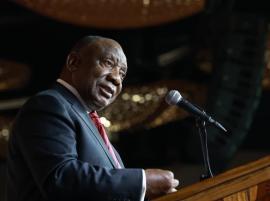
This is according to President Cyril Ramaphosa who delivered a keynote address at the Black Business Council (BBC) gala dinner in Kempton Park on Friday.
“We must dispense with the false choice that we urged to make between growth and transformation. Transformation is vital if growth is to be meaningful, inclusive, and sustainable. Growth is essential if we are to transform our economy effectively,” the President said.
He said South Africa’s task was to ensure it pursues both growth and transformation with more vigour and to greater effect.
“Seventy years ago, our forebears declared that the people shall share in the country’s wealth. That must remain among our foremost ambitions as a nation.
“Fundamental economic transformation is vital to the growth of our economy and the progress of our nation,” the President said, adding that the BBC continues to be a leading voice for transforming the South African economy.
“The BBC understands that this transformation is necessary not only for its members, but for our entire society as we work to undo the inequalities and injustices of our past.”
Economic empowerment
President Ramaphosa said government must reaffirm its commitment to redress and restitution.
“We must recognise that economic empowerment is an undertaking that requires deliberate action across nearly every area of our national life. It is not limited to a few laws, policies, and regulations.”
The economic empowerment of black South Africans begins at birth, encompassing nutrition, healthcare, early childhood development, and the quality of basic education.
“We must ensure that the black child receives the same developmental foundation that all children need to succeed in life.”
The President announced that over 200 000 unemployed young people have begun working in thousands of schools across the country. This opportunity allows them to gain valuable skills and contribute to improving educational outcomes for future learners.
He emphasised their commitment to achieving a South Africa characterised by equality and equal opportunity for all.
In addition, President Ramaphosa highlighted that the Broad-Based Black Economic Empowerment (B-BBEE) Act and the Employment Equity Act were essential components of the country’s legislative framework.
“Since these Acts came into being, there have been notable increases in black business ownership as well as in the number of women-owned businesses.”
Shifting to household income, he said the country had seen progress in narrowing the gap between racial groups.
According to Statistics SA data, black African households saw a real income growth of 46% between 2006 and 2023. In comparison, coloured households experienced a growth of 29%, while Indian households saw an increase of 19%.
“While this can be considered progress, the average income of white households is still nearly five times as high as black African households.
“On some employment measures, we are also seeing the gap narrowing.”
Between 2003 and 2023, the proportion of senior management positions held by black Africans grew from 14% to 27%.
“Again, important progress. But not at the scale or at the pace that we need. The data that we have shows that our Broad-Based Black Economic Empowerment measures have made an impact, but we need to do more, and we need to do better.”
He acknowledged concerns regarding the impact of establishing the Government of National Unity (GNU) on the government’s approach to economic empowerment and transformation.
“The parties to the GNU reflect a wide range of political, social, and economic perspectives. Even now, these parties continue to articulate differing positions in public.”
Business
By driving investment, improving efficiency, and increasing competition in sectors such as electricity, logistics, water, and telecommunications, the government will significantly lower the cost of doing business.
“We will reduce the barriers to entry for emerging businesses, including businesses in townships and rural areas.”
As South Africa aims to develop new industries such as renewable energy, electric vehicles, and green hydrogen, President Ramaphosa said the country would create opportunities for the rise of new black- and women-owned businesses. – SAnews.gov.za


