


The Department of Science, Technology, and Innovation (DSTI) has signed another significant partnership aimed at enhancing science, technology, and innovation cooperation with Algeria.
The partnership, known as the Plan of Action for 2026-2028, currently focuses on several strategic areas, including nuclear science and technology, the co-founding and implementation of the African Laser Centre (ALC), and the establishment of the Nanosciences African Network.
In addition, it emphasises the transfer of technical knowledge and equipment, as well as advancements in space propulsion and telecommunications.
The Plan of Action will also explore new areas of cooperation such as nanotechnology, renewable energy, nanomedicine, food and energy security, health innovation and vaccine development, artificial intelligence and emerging Technologies and others.
As much as this is a joint programme, South Africa’s National Research Foundation (NRF) will lead its implementation.
As a government-mandated research and science development agency, the NRF funds research, the development of high-end human capacity and critical research infrastructure to promote knowledge production across all disciplinary fields.
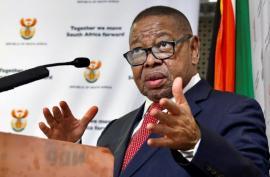
This comes after Minister of Science, Technology and Innovation Blade Nzimande led a high-level South African delegation on a comprehensive visit focused on science, technology and innovation (STI) in Tunisia and Algeria.
The signing ceremony was preceded by an opening ceremony, where Algeria’s Minister of Higher Education and Scientific Research, Kamel Bidar, and Nzimande delivered their keynote speeches.
Nzimande reflected on the special bond between South Africa and Algeria. In addition, he said the two nations share a strong commitment to the advancement of the African continent.
“Similarly, our two countries also share a firm commitment to the realisation of a more just and humane world that will be underpinned by the values of human solidarity, peaceful coexistence, and a respect for the sovereignty of all nations, regardless of their size.”
Emphasising the strategic importance of cooperation in STI between South Africa and Algeria, Nzimande stated, “Both Algeria and South Africa recognise that, to address our urgent national development goals and achieve higher levels of development, we must consistently enhance our national scientific capabilities.”
The Minister believes that the countries’ shared conviction about the role of STI in development and commitment to cooperation is, in a way, a continuation of their liberation struggles.
“But now against underdevelopment and for prosperity in our respective countries, and on the rest of the continent. I must also say that we are highly impressed by the investments that you have made in building your public science system and its constituent institutions.”
The department emphasised that signing the Plan of Action between South Africa and Algeria is crucial for reinforcing both countries’ commitment to supporting the implementation of key development programs on the African continent.
These programmes include Agenda 2063, the African Continental Free Trade Area (AfCFTA), and the African Union’s Science, Technology, and Innovation Strategy for Africa (STISA-2034).
On Tuesday, South Africa and Tunisia signed a landmark agreement aimed at scaling up collaboration in STI in a bid to deepen bilateral cooperation.
The agreement, signed during the official visit by Nzimande to Tunisia, forms part of the Scaling up Tunisia–South Africa Strategy.
It includes a detailed plan of action and the formal minutes of a joint research call meeting. – SAnews.gov.za


