


This year, South Africa stands at an extraordinary convergence of four historic milestones, which paved the way for the country’s freedom and laid the foundation for a democratic dawn.
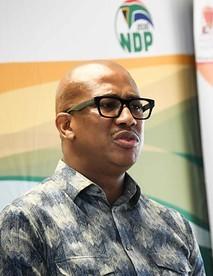
This according to Deputy Minister in The Presidency Kenny Morolong, who delivered remarks at the Limpopo leg of the Milestones of Freedom campaign held at the University of Limpopo on Tuesday.
“We mark 30 years since the adoption of our democratic Constitution, 50 years since the 1976 youth uprising, 70 years since the historic Women’s March of 1956 and 60 years since the forced removals from District Six.
“They are milestones in the long journey of our people from oppression under apartheid, to a society founded on equality, dignity and human rights,” the Deputy Minister noted.
Morolong said throughout this year, South Africans will come together to remember the country’s history, honour those who carried the country to where it is now, and renew the fundamental promise of democracy.
The national Milestones of Freedom campaign was launched by President Cyril Ramaphosa at the Union Buildings earlier this year and is held under the theme: “Honouring the Past. Delivering the Future”.
“This Milestones of Freedom campaign challenges all of us to protect the hard-won rights of our people and to work together to build the just, equitable and prosperous South Africa envisioned in our Constitution.
“It is also a call to action to strengthen service delivery, deepen social cohesion, expand opportunity and ensure that the tangible gains of our democracy reach every community. Today, we proudly bring this national movement to Limpopo.
“The road to South Africa’s freedom runs deep through this province. Its women, its youth, its traditional leaders, its workers and its rural communities have helped write some of the most important chapters of our national story,” Morolong said.
The women of 1956
The Deputy Minister noted that the commemoration of Women’s Month in August called for South Africans to reflect on how far the country has come in the journey towards freedom and equality, describing the 1956 Women’s March as “one of the most powerful acts of courage in our history”.
“On 9 August 1956, approximately 20 000 women from across South Africa marched on the Union Buildings to protest against the apartheid pass laws.
“They came from cities, towns, townships and rural communities carrying the hopes of generations. Among them were the daughters of this province," Morolong said, while paying tribute to Lilian Ngoyi, one of the four leaders of the historic march.
He used the platform to pay homage to Charlotte Maxeke, born in 1874 in Ga-Ramokgopa, a pioneering activist in the struggle for freedom. Maxeke was the first black South African woman to earn a university degree, graduating with a Bachelor of Science from Wilberforce University in Ohio, USA, in the early 1900s.
Morolong highlighted that women from all over the country demonstrated that the struggle for dignity and freedom was not confined to the streets of Pretoria.
“When Limpopo speaks of the Women’s March of 1956, it does not speak of distant historical figures. It speaks of mothers, grandmothers and freedom fighters, whose courage and sacrifice helped shape the democratic South Africa we know today.
“Their struggle laid the foundation for a nation in which women enjoy rights that were denied to generations before them, including the right to vote, equality before the law and the right to equal treatment in the workplace,” he said.
The Deputy Minister emphasised that these are among the gains of South Africa's democracy that must cherished, protected and advanced.
“These gains have been supported by transformative policies and programmes aimed at dismantling the legacy of apartheid and expanding opportunities for women. Their contribution is equally significant in agriculture. Limpopo recorded 289 860 female-headed agricultural households in 2022, compared with 230 272 male-headed agricultural households.
“These figures underscore the indispensable role of women in food production, rural livelihoods and the local economy. These achievements remind us that the courage of the women of 1956 was not in vain.
“They opened doors through which generations of women have walked. Our responsibility is to ensure that those doors remain open and that every young girl growing up in Limpopo can see a future in which her dreams are not limited by her gender, her circumstances, or the place where she was born,” he said.
Youth take to the streets
Turning to June 1976, Morolong said the events of that time did not emerge in isolation.
“Here in Limpopo, at the then University of the North, affectionately known as Turfloop (now the University of Limpopo), was where a generation of Black Consciousness activists had already been shaping ideas that would help ignite a national movement.
“It is here, on this very campus, that intellectual resistance met political courage, and where the seeds of a national awakening were firmly planted,” he said.
Former student at the university and struggle veteran, Azwinndini Mutheiwana, said as an activist then, they fought against the discrimination of students by the university management.
“Our revolution is not complete; the struggle continues. We fought so that all can enjoy the fruits of democracy,” Mutheiwana said.
Prior to the formal programme, Morolong conducted a walkabout within the university precinct and was taken to an area that was used back then as a meeting place for politicians.
Morolong then walked to the university’s square, where he lit the Torch of Freedom, which honours the sacrifices of those who fought for freedom. He urged the new generation to protect, uphold and advance the gains of South Africa’s democracy. – SAnews.gov.za


