

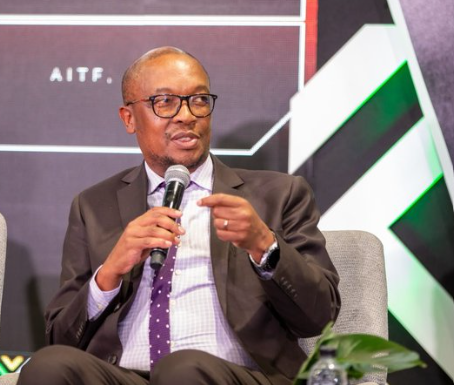
Government's commitment to localisation, transformation and transitioning to new energy vehicles (NEVs) has taken centre stage at the opening session of the South African Auto Week in Durban.
In his opening address at the three-day event, Trade, Industry and Competition (dtic) Minister Parks Tau outlined government's vision of moving the automotive sector towards a prosperous and sustainable future -- one where transformation and competitiveness do not exist in tension.
“An industry that draws on all of its people, and on a broad and capable supplier base, is a stronger industry.
“It is more resilient to shocks, more responsive to its customers and more deeply rooted in the country that hosts it, and localisation is where transformation becomes real.
“Every imported component that we learn to make here is an opportunity for a new supplier, a new investment and new jobs,” Tau said.
South African Auto Week is a platform that facilitates high-level dialogue between industry leaders and government policymakers to shape regulatory frameworks, support local manufacturing and address sector challenges.
Tau told delegates that government is putting in place instruments to anchor the vision of transformation and localisation, and to ensure that emerging companies (owned by previously disadvantaged citizens) are not left behind in the transition to NEVs.
“The transition to new energy vehicles is a chance to do things differently. Batteries, electric drive units, power electronics, thermal systems and charging equipment are new value chains. They are still being built. Black- and women-owned firms can enter them at the start, as owners and partners, rather than on the margins,” he said.
He reasserted the significance of the current review of the Automotive Production and Development Programme 2 (APDP2). The programme is South Africa's primary automotive industrial policy framework, launched on 1 July 2021, to succeed Phase 1 of the APDP, and guide the sector toward the South African Automotive Masterplan (SAAM 2035).
“I have been clear that the programme must reward manufacturing in South Africa, not assembly alone, and must support component manufacturers.
"A 150% investment allowance now applies to qualifying investment in electric and hydrogen vehicle production.
“Through the Automotive Investment Scheme, the Industrial Development Corporation (IDC), the National Empowerment Fund (NEF) and our other development finance institutions, we will continue to support investment in the supplier base,” he said.
He admitted that there are challenges that continue to bedevil the sector.
“Some component manufacturers, black-owned and otherwise, are under real pressure from imports, energy and logistics costs and weaker demand. Some have closed. We cannot speak about transformation without also speaking about keeping this base alive.
“To this end, we are pursuing the Africa Automotive Pact through the Association for African Automotive Manufacturers (AAAM) and our partners in Egypt and Algeria. This mechanism will give life to the AfCFTA [African Continental Free Trade Area] and enhance our diversification agenda as we access new markets for growth,” Tau said.
In 2023, the South African automotive industry generated R270.8 billion in revenue from vehicle and component exports, representing a robust 19.1% growth compared to the previous year. Exports to African countries totalled 25 381 vehicles, signalling promising opportunities for further expansion under the AfCFTA.
READ | Automotive stakeholders celebrate record exports
South African Auto Week is being held at the International Convention Centre in Durban, led by the National Association of Automobile Manufacturers of South Africa and the Automotive Business Council in conjunction with the KwaZulu-Natal Provincial Government and the Department of Trade, Industry and Competition. – SAnews.gov.za


