


South Africa and China have agreed on a set of key measures to deepen cooperation in digital education, technical skills development and student mobility.
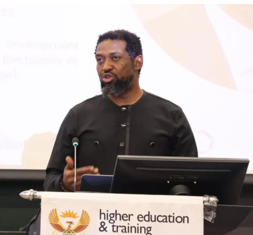
The agreement follows bilateral talks between Higher Education and Training Minister Buti Manamela and China’s Vice Minister of Education Xu Qingsen, held on the sidelines of the World Digital Education Conference in Hangzhou on Tuesday, 12 May 2026.
The meeting produced a framework aimed at strengthening collaboration in areas such as artificial intelligence (AI), vocational training and industry-linked education pathways.
Among the agreed outcomes are the establishment of a structured cooperation framework on AI in education and digital transformation, and the creation of a Joint Technical Working Group to oversee the rollout of China–South Africa Vocational and Technical Centres across all nine provinces.
The two countries also committed to expanding technical and vocational education and training (TVET) cooperation, aligning programmes with key industrial sectors including AI, robotics, renewable energy and advanced manufacturing.
Manamela said the partnership is moving beyond isolated projects towards a more coordinated system of cooperation that directly supports industrialisation, employment, and youth development.
“This engagement is about translating political commitments into practical outcomes that deliver at scale,” he said.
The bilateral meeting also resolved to strengthen scholarship programmes, with a shift towards aligning funding with South Africa’s industrial priorities.
These include AI, engineering, green energy, advanced manufacturing and the development of TVET lecturers.
Currently, South Africa and China are jointly administering multiple scholarship programmes, including initiatives targeting young people not in education, employment or training (NEET), as well as sector-specific training supported by Sector Education and Training Authorities (SETAs).
Both countries agreed to expand postgraduate study opportunities and joint research initiatives as part of the next phase of cooperation.
A major focus of the discussions was strengthening education-to-employment pathways, building on existing cooperation between South Africa and Chinese institutions.
Among this include is the partnership with Beijing Polytechnic College, where a cohort of South African TVET students has completed specialised training in new energy vehicle and hybrid technologies, with Chinese automaker BYD committing to provide internships and employment opportunities.
Another key outcome is the improved alignment of short-term training programmes with South Africa’s developmental priorities.
Future programmes will focus on areas such as AI governance, digital learning systems, industrial policy and digital public infrastructure, with the aim of strengthening institutional capacity across government and the post-school education sector.
Toward a strategic partnership
The bilateral engagement builds on commitments made during the 9th Session of the South Africa–China Bi-National Commission earlier this year, where both countries agreed to deepen cooperation across sectors.
Manamela said South Africa sees the partnership as part of a broader strategy, positioning the country as a gateway for China–Africa collaboration in education and skills development.
“We are ready to move from a relationship defined by individual projects to one characterised by coordinated systems cooperation,” he said.
“South Africa is ready to move from a relationship characterised by individual projects to one defined by coordinated systems cooperation, cooperation that contributes directly to industrialisation, employment, youth development, and the building of capable institutions on both sides,” Manamela said. – SAnews.gov.za


