


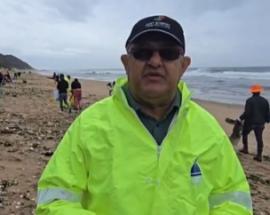
By Narend Singh
Each year, World Oceans Day provides an opportunity to reflect on humanity's relationship with the sea. This year, the theme, "Reimagine: Beyond the world we know, a new relationship with our ocean", challenges us to think differently about the future we wish to create.
For South Africa, a nation blessed with more than 3,000 kilometres of coastline and an ocean economy that supports livelihoods, trade, tourism and food security, this challenge could not be more urgent.
The ocean is often viewed as something distant from our daily lives a vast expanse beyond our cities and communities. Yet nothing could be further from the truth. The ocean produces much of the oxygen we breathe, regulates our climate, supports biodiversity and sustains millions of livelihoods. Every South African is connected to the ocean, whether they live on the coast or hundreds of kilometres inland.
Reimagining our relationship with the ocean begins by recognising a simple but profound truth, what happens upstream ultimately affects what happens downstream.
The health of our oceans is determined long before rivers reach the coast. The decisions we make in our homes, businesses, municipalities and industries shape the quality of our rivers, estuaries and coastal waters. Pollution entering a river in the interior does not disappear. It travels through catchments and estuaries before eventually reaching the sea.
This Source to Sea perspective is central to South Africa's environmental governance framework. It recognises that protecting our oceans requires protecting the entire ecological system that feeds into them.
One of the clearest examples of this interconnectedness is plastic pollution.
For too long, plastic pollution has been viewed solely as a waste management issue, while effective waste collection and recycling remain essential, the challenge extends far beyond litter. Plastic pollution affects ecosystems, biodiversity, human health, tourism, fisheries and economic productivity. It undermines the resilience of communities and threatens the natural systems upon which we depend.
Recent scientific studies undertaken in South Africa continue to deepen our understanding of how microplastics and other pollutants move through our river systems and into our oceans. The evidence is increasingly translucent plastic pollution is not a single sector problem and cannot be solved through isolated interventions. It demands coordinated action across government, industry, academia, civil society and communities, and this is why partnerships matter.
Addressing complex environmental challenges requires all spheres of government and all sectors of society to work together. It requires evidence-based policymaking, investment in scientific research, and collaboration that transcends institutional boundaries. When researchers, municipalities, state owned entities, environmental organisations and communities unite around a common purpose, meaningful progress becomes possible.
South Africa is also contributing to international efforts to confront plastic pollution. As negotiations continue towards a legally binding global agreement on plastic pollution, countries around the world are recognising that this challenge knows no borders. Pollution released into one ecosystem can affect another thousands of kilometres away.
Collective action is therefore not simply desirable, it is essential.
As we commemorate World Oceans Day during Youth Month, we must also recognise the opportunities that a healthier ocean can create for future generations.
The transition to a greener and more sustainable economy offers significant prospects for young South Africans. Environmental restoration, recycling, waste management, marine science, conservation, maritime industries, and broader ocean-based economic activities all hold the potential to create jobs, stimulate entrepreneurship and foster innovation.
Our young people are not merely beneficiaries of environmental protection; they are its future leaders. By investing in environmental skills, research, technology and sustainable industries, we can equip a new generation to participate meaningfully in the blue economy while safeguarding our natural heritage.
Ultimately, reimagining our relationship with the ocean requires more than policy change. It requires a shift in mindset.
We must move away from seeing nature as separate from ourselves and instead recognise our deep interdependence with the ecosystems that sustain life. We must rethink how we produce, consume and dispose of resources. We must strengthen cooperation between institutions and communities. And we must acknowledge that every action taken upstream has consequences downstream.
The renowned oceanographer Sylvia Earle once observed; "With every drop of water you drink, every breath you take, you're connected to the sea."
World Oceans Day reminds us that this connection carries both responsibility and opportunity.
If we are prepared to reimagine our relationship with the ocean, we can build a future where rivers flow free from pollution, where coastal ecosystems are resilient, where sustainable development creates opportunities for our youth, and where our oceans continue to sustain life and prosperity for generations to come.
The future of our ocean begins with the choices we make today.
*Singh is the Deputy Minister of Forestry, Fisheries and the Environment


