


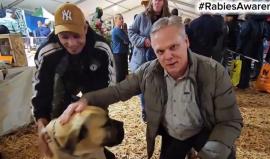
As South Africa joins the globe in observing World Rabies Day, Agriculture Minister Willie Aucamp has urged South Africans to play their part in preventing and eliminating rabies by ensuring that their dogs and cats are vaccinated against the deadly disease.
Observed on 28 September, World Rabies Day is an annual awareness campaign aimed at promoting rabies prevention and highlighting progress towards eliminating the disease.
The 2026 observance marks the 20th World Rabies Day, held under the theme: “Stronger Together”, highlighting the importance of collaboration among communities, pet owners, veterinary professionals, healthcare workers, government departments, policymakers, and partner organisations in the fight against rabies.
“This year is about realising we are stronger together in the fight against rabies. It is still Rabies Month, and I want to encourage all dog and cat owners out there to please make sure that your animals are vaccinated against rabies. It can be prevented,” Aucamp said.
The Department of Agriculture said communities can contribute to eliminating rabies by ensuring that their pets are vaccinated and sharing information about the disease with family members and others.
“Vaccinating your pet against rabies is more than responsible pet care. It is an act of protection for your family, your neighbours, and your entire community,” the department said.
This year’s campaign also reinforces the importance of the One Health approach, which recognises the interconnectedness of human, animal, and environmental health in preventing and controlling diseases.
Rabies is a deadly viral disease that affects the central nervous system and is almost always fatal once clinical symptoms appear. The virus can be transmitted to humans through the bite or scratch of an infected animal, or when its saliva comes into contact with broken skin or mucous membranes.
The department has urged anyone exposed to an animal suspected of having rabies to wash the affected area thoroughly with soap and running water for 10 to 15 minutes and seek immediate medical attention.
Post-exposure prophylaxis, which includes a course of rabies vaccinations and, where necessary, the administration of rabies immunoglobulin into or around the wound, can prevent the disease from developing if administered promptly.
“While rabies is 99.9% fatal once a person or animal shows clinical signs, it is also 100% preventable,” the department said.
The public is encouraged to consult their local state or private veterinarian, animal health technician, or animal welfare organisation for information on rabies vaccination and prevention.
State veterinary office contact details are available at:
https://www.nda.gov.za/index.php/component/content/article/451-provincialveterinary-services-contacts
A list of all registered veterinary facilities is available at: https://savc.org.za/wpcontent/uploads/2026/07/FacilityRegisterPublish_July-2026.pdf - SAnews.gov.za


