


Productivity growth must be the cornerstone of South Africa’s push to create decent jobs, boost industrial competitiveness and bridge deep-seated economic divides.
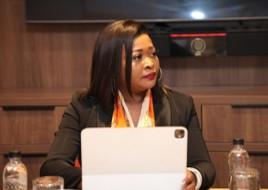
This, according to Deputy Minister of Employment and Labour, Judith Nemadzinga-Tshabalala, who delivered the keynote address at the National Economic Development and Labour Council (NEDLAC) Symposium in Pretoria.
The symposium is held under the theme: "Advancing Productivity and Decent Work through Social Dialogue in Southern Africa."
The Deputy Minister emphasised that productivity extends far beyond traditional macroeconomic metrics.
“Productivity is not a technical statistic reserved for economists. It is the foundation on which decent jobs are created, on which businesses remain competitive in an unforgiving global economy, on which household incomes rise and on which the promise of social justice becomes real rather than theoretical,” Nemadzinga-Tshabalala said.
She noted that across Southern Africa and beyond, governments are grappling with several challenges including:
- unemployment, particularly amongst youth;
- persistent skills mismatches;
- high levels of informality; and
- the disruptive but also “opportunity-laden forces of digitisation and the green transition”.
“These are not separate from problems to be solved in isolation, as they are different faces of the same underlying challenge. Our economies are not yet generating enough productive, decent work fast enough or inclusive enough.
“Therefore, productivity growth is how we change that trajectory. When workers, firms and sectors become more productive, their gains can fund higher wages, finance further investments, strengthen the tech space that pays for public services and improve the competitiveness of our industries in the regional and global markets and create the jobs that we need,” the Deputy Minister stated.
However, she cautioned that without proper oversight, productivity gains could deepen economic inequality rather than resolve it.
“Left unmanaged, productivity gains can just as easily concentrate in fewer hands, displace workers without a plan for their transition, or widen the very inequalities we are trying to close.
“The direction those gains take, towards shared prosperity or towards exclusion, is determined not by economics alone, but by the institutions and processes through which decisions are made. This is precisely where social dialogue becomes indispensable,” Nemadzinga-Tshabalala asserted.
She reaffirmed government’s commitment to social compacting, citing statutory bodies such as NEDLAC as essential democratic mechanisms to facilitate social dialogue.
“NEDLAC… has such a critical role to play, and institutions like it are being built and strengthened across different African regions.
“Indeed, both the AU [African Union] and UN [United Nations] frameworks explicitly identify social dialogue as the primary vehicle for achieving their development and decent work objectives.
“Acknowledging that the transition to a formal and productive economy can be facilitated through an integrated strategy, policy coherence, institutional coordination, and active social dialogue,” Nemadzinga-Tshabalala said.
NEDLAC will tomorrow host its 31st Annual Summit, which will be addressed by Minister of Electricity and Energy Dr Kgosientsho Ramokgopa. – SAnews.gov.za


