


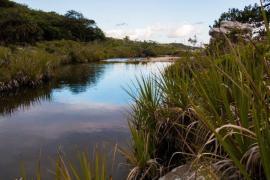
The Mkambati Nature Reserve in the Eastern Cape has been designated as South Africa’s newest Wetland of International Importance under the Ramsar Convention, marking a significant conservation milestone.
The Ramsar Convention identifies and protects wetlands of global significance, known as Ramsar Sites.
“The designation acknowledges that the many wetlands found at Mkambati have unique ecological, cultural and socio-economic value, placing the reserve firmly on the global map of internationally recognised wetlands,” Deputy Minister of Forestry, Fisheries and the Environment Narend Singh said on Wednesday.
Situated along the scenic Wild Coast, Mkambati forms part of a unique ecological area, home to plant and animal species found nowhere else in the world.
Wetlands play a vital role in supporting life and livelihoods. They provide clean water, grazing areas during dry periods, and habitats for biodiversity.
They also create opportunities for sustainable tourism, nature-based enterprises and job creation through restoration and conservation efforts.
Mkambati is home to rare wetland types, including swamp forests, and features multiple estuaries. It is also among the few places globally where waterfalls cascade directly into the ocean.
“When we began the process to secure Ramsar status for Mkambati, the Department of Water and Sanitation assisted with water quality monitoring. The findings confirmed that the rivers in the area are exceptionally clean,” Singh said.
He added that the wetlands within the reserve are in good condition.
“A recent national biodiversity assessment shows that wetlands and estuaries are among the most threatened and least protected ecosystems in South Africa.
“At a time when wetlands face growing pressures from pollution, poor agricultural practices and infrastructure development, finding ecosystems in such good condition is rare and they must be protected,” Singh said. -SAnews.gov.za


