


Water and Sanitation Minister Pemmy Majodina has welcomed the steady advancement of the Lesotho Highlands Water Project Phase 2 (LHWP2), with the Polihali Dam expected to start impounding water in July 2027.
Majodina, accompanied by Deputy Minister in the Presidency responsible for Planning, Monitoring and Evaluation Seiso Mohai, concluded a three-day quarterly oversight visit to the project in Mokhotlong District, Lesotho, on Sunday.
The visit on 11–13 September 2026, coincided with a peak construction period for the water transfer project, which includes the Polihali Dam, the Polihali-Katse Water Transfer Tunnel, associated road infrastructure and the resettlement of affected communities.
Majodina welcomed the progress made since the previous oversight visit in April, with overall construction progress now at 56.7%. Expenditure stands at R24 billion against the R53 billion allocated to the project.
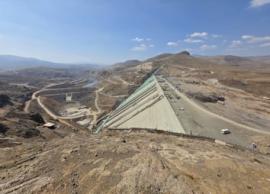
“Construction of the 165-metre-high concrete-faced rockfill Polihali Dam has reached 53%, despite an initially delayed construction start. The reservoir is expected to begin impounding water in July 2027,” Majodina said.
Once completed, the Polihali Reservoir will have a storage capacity of about 2 322 million cubic metres and will increase the current water transfer rate to South Africa by 490 million cubic metres a year.
This will raise the annual transfer rate from the existing 780 million cubic metres to about 1 270 million cubic metres into the Integrated Vaal River System through the Katse Dam and its network of transfer and delivery tunnels.
Progress on the 38-kilometre Polihali-Katse Water Transfer Tunnel has reached 58%. However, the Minister said excavation has experienced some delays due to challenging geological conditions underground, which have slowed the progress of tunnel boring machines (TBMs) operating from both the Polihali and Katse sides.
The Polihali TBM has excavated about 10.5% of its section, while the Katse TBM has completed 14.3%. The contractor has implemented a mitigation plan aimed at recovering lost time.
“The project has also made progress on the resettlement programme, with about 209 households affected by the new dam infrastructure earmarked for relocation. The overall resettlement programme, which includes the construction of new homes, relocation of graves and compensation, is approximately 49% complete,” the Minister said.
A key milestone during the oversight visit was the completion and unveiling of two major bridges, the Khubelu and Mabunyaneng bridges, by Majodina and Lesotho’s Minister of Natural Resources, Mohlomi Moleko.
The 25-metre-high Khubelu Bridge and 12-metre-high Mabunyaneng Bridge bring to three the number of major bridges completed under the project. The 90-metre-high Senqu Bridge, which was opened to traffic earlier this year, is also complete.
The bridges form part of critical infrastructure designed to maintain safe and reliable access to Lesotho’s national road network, including the A1, which links Mokhotlong in the mountainous north-east of the country with the capital, Maseru.
The structures will ensure continued connectivity for communities and road users even after the Polihali Reservoir reaches full supply. Designed to accommodate two-way traffic and pedestrians, the bridges will also support the long-term operation of LHWP2.
Since its inception, LHWP2 has directly created about 16 000 job opportunities for Basotho and South Africans, while also bringing in specialised skills from other countries to support skills transfer and build local capacity.
The project is being implemented by the Lesotho Highlands Development Authority (LHDA), with South Africa’s Trans-Caledon Tunnel Authority (TCTA) responsible for financing, under the Lesotho Highlands Water Commission, which represents the two countries.
The Lesotho Highlands Water Project is a major transboundary water partnership between South Africa and Lesotho and is South Africa’s largest investment beyond its borders. Through the transfer of water to the Integrated Vaal River System and infrastructure development in Lesotho, the project is intended to deliver long-term benefits to both countries.
Majodina and Mohai were accompanied during the visit by South Africa’s High Commissioner to Lesotho, Constance Seoposengwe; South Africa’s Chief Delegate to the Lesotho Highlands Water Commission, Dr Musa Furumele; TCTA Board Chairperson Precious Sibiya and Chief Executive Percy Sechemane; officials from the Departments of Water and Sanitation and Planning, Monitoring and Evaluation; and representatives of water entities including Rand Water and Amatola Water.
The Lesotho delegation included Minister Moleko and Ministers of Public Works and Transport Motjato Moteane, Labour and Employment Tshiliso Mokhosi, and Home Affairs and Police Voeswa Tsheka. – SAnews.gov.za


