


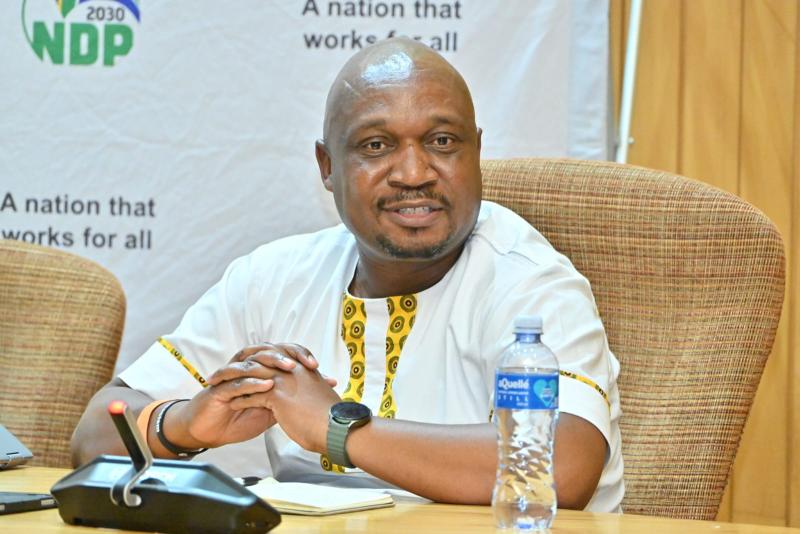
National Heritage Council Programmes Manager Amos Mulaudzi has urged South Africans to use indigenous languages in their daily lives to help preserve culture and heritage, highlighting storytelling as a powerful tool in this effort.
While acknowledging technological advances, Mulaudzi said people must return to basics and respect the sacred nature of traditions.
He highlighted the need to transform South Africa’s heritage landscape by reconnecting communities with oral traditions, storytelling and indigenous knowledge, while critically contextualising historical narratives for today's society.
“It’s a simple thing that people have forgotten: using our languages. We still have to go back to sitting around the fires and listening to stories that educate us about life in general.
“As much as we have digital technology, it doesn’t mean we can forget who we are as people. We therefore have to adapt our indigenous knowledge systems so that we draw on indigenous knowledge in our innovation and creativity,” Mulaudzi said on Wednesday in Pretoria.
He made the remarks during a dialogue titled: “South Africa’s Heritage as a Key Milestone: Institutions and Society”.
The dialogue formed part of Heritage Month commemorations. Heritage Day is observed annually on 24 September. This year, Heritage Month was commemorated under the theme: “Celebrating Our Living Heritage: Strengthening the Ties That Bind Us”.
Mulaudzi said South Africa’s heritage should be taught in the school curriculum because it is central to the country’s identity.
“It’s about who we are. It’s good that technology makes it easier for us to reach communities we would not normally reach. But we also have to use technology responsibly. There are things within living traditions that are sacred.
“There are things within our living traditions that are restricted. So, as and when we share this knowledge and information, it is always important to engage elders and seek their consent.
“The beauty of our living heritage lies in its sacredness. Elders should therefore be involved in decisions about heritage management. They are there to be honoured and acknowledged,” he said.
Kara Heritage Institute Executive Director Dr Mathole Motshekga highlighted the importance of understanding who we are, where we come from, and the heritage that shapes our identity, while recognising Africa’s place and contribution in the world.
“We are an African people on the southern tip of the continent. We are not an outpost of Arabia, or Europe, or Asia. We must teach African spirituality—African spirituality as an exposition of where they really, of course, comes from,” Motshekga said. -SAnews.gov.za


