


Work is underway to enhance government’s budget process after expenditure reviews identified tens of billions of rands in potential savings from poorly performing or inefficient programmes that can be redirected in future budgets.
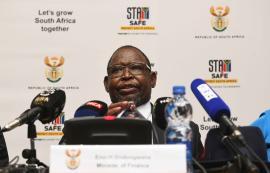
“Going forward, underperforming programmes will be closed as the 2026 Medium-Term Expenditure Framework (MTEF) budget process undergoes redesign,” Finance Minister Enoch Godongwana said on Wednesday, during the re-tabling of the 2025 Budget Review in Parliament.
In its Budget Overview, National Treasury said if government achieves significant savings from implementing the recommendations of these reviews, it may mitigate the need for additional tax measures in the 2026 Budget.
Changes to improve the budget process will be implemented over time.
These reforms will be designed to strengthen government and institutional commitment to fiscal sustainability, refine budget prioritisation and the functioning of budget structures, and improve data systems and capital budgeting, monitoring and reporting.
“When an economy underperforms, as ours has over the last decade, it generates less tax revenue, while requiring increased social spending, widening budget deficits and accelerating debt accumulation.
“To be successful, our strategy of maintaining fiscal discipline, while investing in growth, demands that we prioritise high-impact expenditures. These are expenditures that deliver economic returns, while eliminating inefficiencies, wastage and leakage that too often plague government’s spending,” the Minister said.
To tackle this, National Treasury has undertaken expenditure reviews, looking at more than R300 billion in government spending since 2013, with the aim of identifying duplications, waste and inefficiencies.
“We found potential savings of R37.5 billion over time through improved oversight and operational changes through these reviews.
“New reforms will target infrastructure planning and implementation across provinces and municipalities. A data-driven approach to detect payroll irregularities will replace the more costly method of using censuses," the Minister said.
This initiative will cross-reference administrative datasets to identify ghost workers and other anomalies across government departments.
“Part of the goal of these initiatives is to also remove the regulatory burden on business. To be successful, not just technical solutions are required. Sustained political backing, at the highest levels, is needed to overcome departmental resistance and to protect whistleblowers who expose irregularities and wastage.
“I am happy to say that this political backing has already come from President Cyril Ramaphosa, Deputy President Paul Mashatile, as well as my Cabinet colleagues.
“The President has also undertaken to establish a committee between the Presidency and Treasury to identify wasteful, inefficient and underperforming programmes.
“I call on Ministers, MECs, DGs, HoDs and every official responsible for public funds to embrace these efforts and play their part,” Godongwana said. - SAnews.gov.za


