


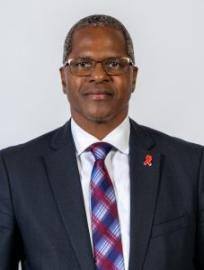
Cooperative Governance and Traditional Affairs (CoGTA) Minister Velenkosini Hlabisa has reaffirmed the District Development Model (DDM) as a central pillar of South Africa’s development strategy.
“The DDM acts as the primary operational framework to bridge the gap between planning and service delivery across all 44 districts and eight metropolitan areas,” Hlabisa said in a statement on Tuesday.
He stressed that the model’s core purpose is intergovernmental alignment and does not replace municipal authority.
Under the framework developed by the Department of Cooperative Governance and Traditional Affairs, municipalities retain their constitutional powers to plan and govern, while the district “One Plan” integrates existing plans from municipalities, provinces, and national departments.
The model aims to avoid duplication, reduce competition for resources and address fragmented infrastructure planning.
“The DDM does not substitute municipal planning but aligns different spheres of government around shared priorities. Chapter 3 of the Constitution obliges all spheres of government to coordinate and integrate plans and programmes,” Hlabisa said.
The DDM operationalises this constitutional principle by bringing together national departments, provinces and municipalities; aligning budgets and infrastructure investment, and spatial planning; and creating joint accountability for development outcomes.
Breaking the pattern of “operating in silos”
Hlabisa said fragmented planning has long undermined effective governance in South Africa, with departments and spheres of government often “operating in silos.”
Since its launch in 2019, the Minister said the DDM has been a game-changer, breaking the pattern and focusing intentionally on integrating planning, budgeting, and implementation.
“With this level of coordination and collaboration, the DDM contributes positively to the realisation of a capable and ethical developmental state,” he said.
The Minister added that the model also supports equity across districts and metros spaces by reducing uneven development between municipalities.
He noted that financially stronger metros and municipalities often have stronger planning capacity and revenue bases, whereas many rural municipalities struggle with limited technical expertise, weak infrastructure planning, and poor coordination with national departments.
“The DDM allows national and provincial governments to strategically channel resources into districts and metros where capacity is weaker, [thereby] improving local and national spatial equity,” Hlabisa said.
Addressing concerns about the model’s impact on municipal autonomy, Hlabisa said coordination is a constitutional requirement that does not threaten local governance.
While some stakeholders have argued that the DDM and the 2024 gazetted “DDM regulations’ are unconstitutional, the Minister said legal opinions obtained by CoGTA disagreed.
“In fact, throughout the intergovernmental dispute processes, especially by both the Western Cape Provincial Government and the City of Cape Town, the intent and objective of the DDM were appreciated and welcomed as a practical approach towards ensuring improved intergovernmental coordination on long-term planning and implementation.
“The concerns raised were more on procedural and technical uncertainties relating to the institutionalisation and implementation of the DDM and how these were outlined in the ‘2024 DDM regulations’, especially on matters relating to the coordination of the DDM across the three spheres of government,” the Minister said.
He added that proposed amendments to the 2024 DDM regulations, currently open for public comment, aim to improve the framework, especially on the roles and responsibilities of intergovernmental stakeholders, and the relationship between “One Plans” and other legislated development plans.
These amendments are aligned with existing planning legislation, including the Spatial Planning and Land Use Management Act (SPLUMA) and the Local Government: Municipal Systems Act of 2000, and the attainment of the objectives underpinning Cooperative Government as determined by Chapter 3 of the Constitution,” Hlabisa said.
Hlabisa said all 44 districts and eight metropolitan municipalities are deeply integrated into national priorities, including economic growth, housing delivery, transport systems, and climate resilience.
“These priorities will be best achieved not through working in isolation, but require coordinated action across all spheres of government, which is precisely what the DDM seeks to achieve,” the Minister said.
He reiterated that the model’s fundamental objective is to ensure that all spheres of government work together to deliver integrated development for the people of South Africa.
Looking ahead, Hlabisa said the outcomes of intergovernmental dispute processes and the proposed regulatory amendments reinforce the DDM as a practical mechanism, aligned with the National Development Plan (NDP), aimed at improving and sustaining intergovernmental coordination and cooperation across the broader government planning environment.
The Minister called for a comprehensive government and society approach to fully institutionalise the DDM nationwide, ensuring that every municipality works for the benefit of the people.
“It is only this game changer that we will be able to turn things around and together.” – SAnews.gov.za


