


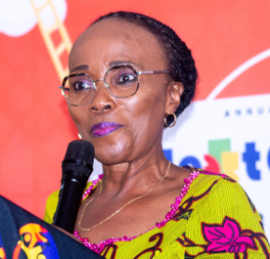
The South African government has outlined an ambitious programme of action for the 2026/27 financial year, placing women, youth and persons with disabilities at the centre of national development efforts.
Presenting her department Budget Vote in Parliament on Wednesday, Minister in the Presidency for Women, Youth and Persons with Disabilities, Sindisiwe Chikunga, said the department’s priorities are aimed at driving inclusive growth, tackling inequality and strengthening social justice.
The budget is tabled during a year of profound historical and constitutional significance for South Africa, including the 70th anniversary of the 1956 Women’s March, 50 years since the 1976 youth uprisings, and 30 years of South Africa’s democratic Constitution.
“We have come a long way and yet we remain far from where we want to be. But the work of freedom continues. The struggle continues,” Chikunga said.
Focus on inclusion and economic participation
Central to the department’s strategy is ensuring that women, youth and persons with disabilities are no longer treated as peripheral groups, but as key drivers of development.
The 2026/27 priorities are aligned with government’s Medium-Term Development Plan, which focuses on driving inclusive growth and job creation; reducing poverty and the high cost of living; and building a capable, ethical and developmental state.
“For our department, these priorities require that all women, young people and persons with disabilities are not treated as an afterthought, but are placed at the centre of government planning, budgeting, implementation and accountability,” the Minister said.
Within this framework, she said the department has identified five key focus areas:
- Accelerating women’s empowerment and strengthening prevention and response to Gender-Based Violence and Femicide (GBVF);
- Confront youth unemployment and vulnerability, among those not in education, employment or training (NEET);
- Deepening inclusion of persons with disabilities;
- Institutionalising responsive planning, budgeting, monitoring, evaluation and auditing, and
- Strengthening coordinated State and societal action from fragmented interventions to achieve measurable impact.
R2.2 billion to drive implementation
To support these priorities, the department has been allocated R2.2 billion for the 2026/27 financial year, with a significant budget of R1.8 billion allocated to the National Youth Development Agency (NYDA) to expand programmes focused on youth entrepreneurship, employment pathways, skills development and paid service opportunities.
Additional allocations include R241 million for the department’s operational work, R111 million for the Commission for Gender Equality, and R46.5 million for the National Council on Gender-Based Violence and Femicide.
Chikunga said these resources will be used to drive policy implementation, legislation, advocacy, mainstreaming, monitoring, evaluation, research, coordination, and partnerships across government and society.
“This is how we give meaning to the struggles we commemorate this year: by moving from memory to measurable impact,” she said.
Legislative and policy priorities
The department will also prioritise key legislation in the coming financial year.
Among the major policy initiatives include the Promotion of Women’s Rights, Empowerment and Gender Equality Bill, which is being prepared for Cabinet; the South African Youth Development Bill, which will be submitted to Cabinet as a discussion document, gazetted for public comment, and released for public consultation across all provinces; and the Disability Rights Bill, being developed in collaboration with the South African Law Reform Commission.
In addition, the department will work on a National Strategy against Teenage Pregnancies and conduct research to inform the development of the national strategy on the care work, aimed at addressing the unequal burden of paid and unpaid care work, and inequality carried by women.
“Our task is to move from policy commitments to measurable accountability,” the Minister said. – SAnews.gov.za


