

The Gauteng Department of Health (GDoH) has reaffirmed its commitment to fighting Gender Based Violence and Femicide (GBVF) through strengthened clinical forensic services, survivor-centred healthcare, psychosocial support and community awareness initiatives.
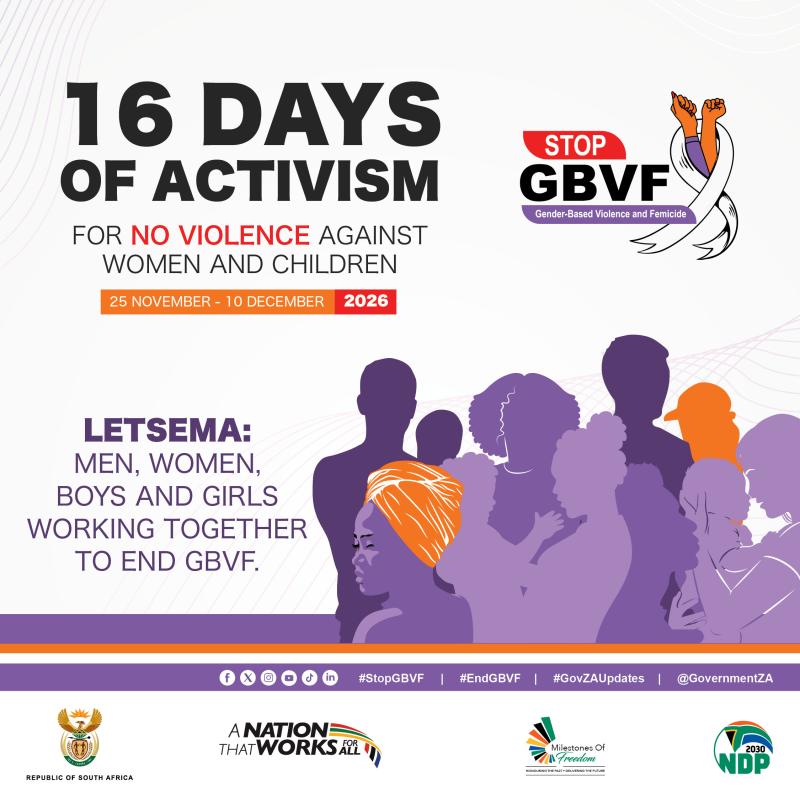
This is as the 16 Days of Activism for No Violence Against Women and Children campaign kicks off across the country on Wednesday, 25 November 2026.
This year's campaign is being held under the theme: “LETSEMA: Men, Women, Boys and Girls Working Together to End Gender-Based Violence and Femicide” and calls for collective responsibility in confronting violence against women and children.
For its part, the GDoH has 27 designated Clinical Forensic Medical Services (CFMS) facilities and Thuthuzela Care Centres (TCC), which “provide specialised healthcare to survivors of gender-based violence, including clinical assessments, forensic medical examinations and support for medico-legal processes”.
“Importantly, survivors of rape and sexual assault do not have to first visit a police station or open a criminal case before seeking medical assistance. They can go directly to their nearest CFMS facility, TCC, or public clinic for assistance.
“Healthcare professionals can initiate the necessary medical care, conduct appropriate examinations, and facilitate referrals and support. Survivors should never delay seeking medical attention because they are uncertain about the reporting process.
“Early presentation is important because some interventions are time-sensitive. These include HIV post-exposure prophylaxis, which must be initiated within 72 hours of exposure, emergency contraception where appropriate, treatment of injuries and the collection of forensic evidence where indicated,” the department stated.
Additionally, the GDoH highlighted that it actively prioritises communities that “require targeted interventions”.
“In Tshwane, the community of Dark City and surrounding locations have been identified as areas of concern following increasing forensic cases, particularly child abuse and intimate partner violence.
“Reports of children presenting more than 72 hours after alleged sexual abuse, as well as concerns about child-on-child sexual offences, highlight the need for early identification, child protection, timely reporting and strengthened community awareness,” the department noted.
The provincial health department emphasised that confronting the scourge of GBVF “requires a change in behaviour and attitudes, particularly among men”.
“In this regard, the department’s Men’s Health Forum Awards yesterday [24 November] recognised male employees who have demonstrated leadership in promoting health and wellbeing, supporting colleagues and contributing to the prevention of GBVF.
“The initiative seeks to encourage responsible leadership, integrity, accountability and positive male role modelling within the department and beyond the workplace.
“Through such initiatives, the department wants men to become positive role models in their families and communities, demonstrating that being a good man means respecting women and girls, rejecting violence, supporting survivors and raising boys who understand equality, dignity and responsibility,” the GDoH said.
The department called for a whole-of-society approach to create safe environments where children can “report abuse, survivors receive support without judgement and perpetrators are held accountable”.
“Anyone experiencing sexual assault or domestic violence, as well as those who suspect child abuse, is urged to seek assistance at their nearest health facility, CFMS or TCC. Survivors must not suffer in silence or delay accessing care.
“While the 16 Days of Activism campaign provides an opportunity to intensify awareness and action, we emphasise that preventing and responding to GBVF is a year-round responsibility requiring sustained action, accountability and a collective commitment to protecting the lives, dignity and rights of women and children,” the department said. – SAnews.gov.za


