


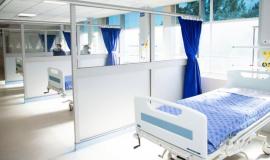
The Gauteng Department of Health (GDoH) has recorded significant improvements in its healthcare infrastructure plans during the 2025/26 financial year.
The department carried out refurbishments at Ward 09 of Dr George Mukhari Academic Hospital, the Breast Clinic at Helen Joseph Tertiary Hospital and the Neonatal Ward at Steve Biko Academic Hospital, the Neonatal Ward at Tembisa Hospital, Ward 11 at Chris Hani Baragwanath Academic Hospital and critical repairs at Chris Hani Baragwanath Academic Hospital.
“These projects are contributing to improved facility functionality and conditions for healthcare delivery, supporting the Gauteng Government's priority of improving services at hospitals and clinics and expanding access to quality healthcare.
“Additionally, acute mental-health capacity increased from 549 to 565 beds during the reporting period, strengthening capacity in an area of growing healthcare need,” the GDoH said.
Additionally, infrastructure investments are advancing to “address ageing facilities, expand capacity and improve the reliability of critical services.
“At Dr George Mukhari Academic Hospital, plans include the development of a new academic hospital, following an undertaking made after an oversight visit by the Presidency and the Ministry of Health in June 2025.
“At Tembisa Provincial Tertiary Hospital, plans include a 300-bed extension of the Mother and Child unit, construction of bulk stores and refurbishment of the mortuary to meet occupational health and safety standards. The relevant infrastructure motivations have been approved.
“Meanwhile, the replacement of generator switchgear project at Steve Biko Academic Hospital is underway to improve the reliability and resilience of its emergency power supply. At Charlotte Maxeke Johannesburg Academic Hospital, replacement of the Heating, Ventilation and Air Conditioning (HVAC) system has been prioritised,” the department stated.
The GDoH noted that it is exploring using public-private partnerships to “support some capital infrastructure needs, complementing government investment and mobilising additional resources for public healthcare infrastructure”.
“Infrastructure needs are identified and prioritised according to available budget and the urgency of clinical requirements, with priority projects submitted annually to Provincial Health Infrastructure for implementation.
“The GDoH acknowledges that infrastructure needs remain substantial, particularly at older facilities, and that sustained capital and maintenance investment is required to address these challenges.
“Accordingly, the department remains committed to accelerating infrastructure delivery and maintenance to improve the condition and functionality of healthcare facilities and ensure communities have access to quality healthcare services,” the department assured. – SAnews.gov.za


