


Municipal fiscal discipline, good governance and transparency are the key elements propelling the Gauteng Provincial Government going forward.
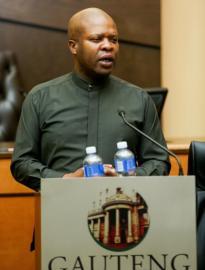
These principles were emphasised by Gauteng MEC for Finance and Economic Development, Lebogang Maile, who presented the provincial budget for 2025/26 in the Gauteng Provincial Legislature on Tuesday.
The Gauteng budget 2.0 for the 2025/26 financial year is R172.3 billion, an increase of some R886.6 million from the budget tabled earlier this year.
As he tabled the budget, Maile registered “serious concern” that only four municipalities have tabled funded budgets while the rest remain unfunded – damaging the credibility of budgets.
“We have stated repeatedly that fiscal discipline requires that municipalities maintain fiscal positions that are consistent with macroeconomic stability and sustained economic growth.
“To reinforce fiscal discipline, the Gauteng Provincial Government and Gauteng municipalities must fund their requirements within the set budget ceilings. This necessitates large-scale budget reprioritisation, making trade-offs, and a drive to identify efficiency gains - all with the aim of enhancing the credibility of the provincial and municipal budgets,” he said.
The Provincial Treasury is stepping in in this regard by providing support to delegated municipalities by “conducting budget assessments on the tabled/draft budget to assist municipalities with improving their budget funding positions”.
“The outcomes of this intervention will be confirmed by the final budget assessments to be conducted on adopted budgets.
“On revenue matters, municipalities, with the assistance of the Gauteng Provincial Treasury, have conducted cost-reflective tariff assessments to determine if current tariffs adequately cover the full cost of delivering the service,” Maile said.
Good governance
Maile told the provincial legislature that supply chain management (SCM) was the most “critical component” supporting service delivery to Gauteng citizens.
On this matter, the administration was dealing with SCM capacity challenges as the function is associated with issues including:
- Irregular expenditure;
- incomplete infrastructure projects;
- litigation to reverse awards or stop procurement processes already underway;
- high levels of accruals; and
- late payments.
“These issues have a colossal negative impact on service delivery, while late payments severely affect small, medium and micro enterprises,” the MEC noted.
A capacity assessment conducted found that there was “under capacitation in areas such as contract and project management”.
“Furthermore, we have identified that there has been limited ability to balance compliance and matters of the transformative role of SCM. Our SCM systems [also] need modernisation to improve transparency and offer protection to process integrity.
“Additionally, while there is a good distribution of qualified personnel with relevant graduate qualifications, we have identified concentrations of low skilled personnel operating in Request for Quotation processes. To this end, we are working on a personnel recruitment and placement strategy that should allow the SCM system to be agile to the need to balance capacity needs in all critical functions,” Maile said.
Digitisation, he said, will be key to improving the provincial government’s inefficient SCM systems.
“It is our primary objective is to ensure that provincial departments and entities in Gauteng receive all their tenders electronically, and that the evaluation of said tenders are conducted through advanced technological means.
“This digitisation is crucial if we are to stem the tide on inefficient SCM processes. In this regard, the Gauteng Provincial Government has been working with the Gautrain Management Agency to adapt the advanced procurement system solution that they have already implemented,” he added.
Transparency
The MEC told the gathering that government needs “a raft of measures to turn around SCM and general financial management in the province”.
“Financing institutions must be able to trust that when the Gauteng Provincial Government issues a purchase order, the subsequent processes shall be able to ensure that payment happens timeously – in 30 days for all commitments, 15 days for SMMEs in general and 10 days for township suppliers.
“This is not simply a matter of SCM efficiency, but an intentional approach towards transforming the economy by making it inclusive and supporting communities on the margins,” Maile said.
Other measures include creating a system that reflects universal prices for government consumed commodities which the provincial treasury has been exploring by working on a Market Research Price Data Solution.
“The age of disproportionate increased pricing by suppliers for the government will and must be eradicated. With these measures, accounting officers and authorities will be empowered effectively and in real time to make decisions that are anchored in competitive prices for budgeting and contracting decisions.
“The measures that we are envisaging and putting in place are designed to eliminate corruption, build confidence in systems of procurement and facilitate inclusive economic growth and transformation.
“As the provincial government, we are unequivocal in our stance that no business in Gauteng should have to pay an incentive to participate in the economy – be it to provide services to the state or to receive payment for services rendered.
“A business must trust that the Purchase Order it holds is backed by a reliable process from delivery to payment – one that eliminates human interference,” Maile said. – SAnews.gov.za


